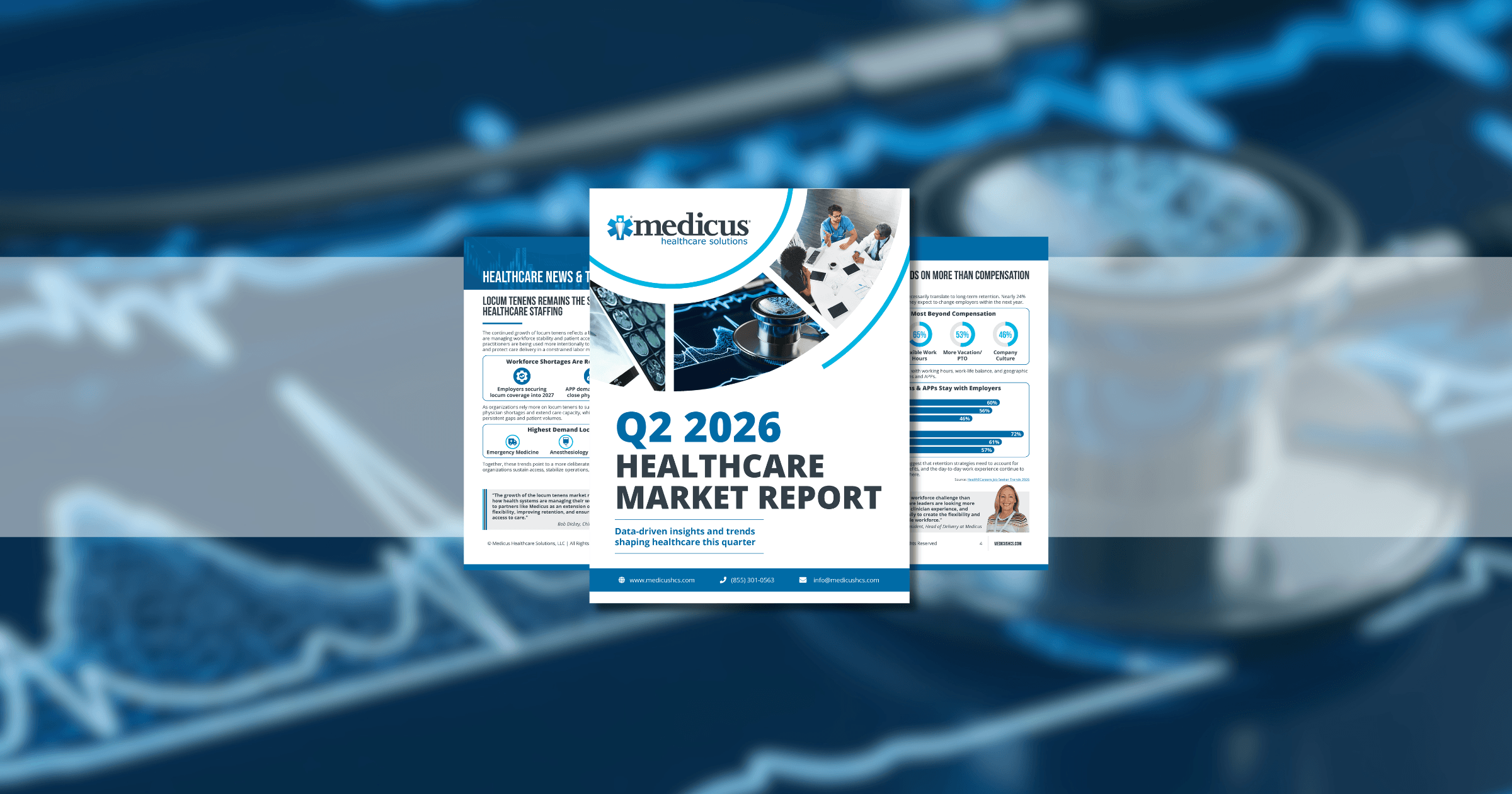
The Medicus Q2 2026 State of the Market Report gives healthcare executives a clear, data-driven snapshot of the workforce trends shaping access, cost, and operational stability. It highlights the strategic expansion of locum tenens, rising turnover in key specialties, and widening gaps between supply and demand, along with insights on retention, evolving staffing models, and early AI adoption. The report helps leaders see where pressure is building and where to act to strengthen coverage, improve resilience, and plan more confidently in a constrained market.
To access the report, please complete the short form below.
View the Q2 2026 Healthcare Market Report
View the Q2 2026 Healthcare Market Report
Q2 2026 Healthcare Market Report Snapshot
Locum Tenens Remains the Strongest Area of Growth in Healthcare Staffing
Physician shortages continue to drive demand for locum tenens, particularly in emergency medicine, anesthesiology, psychiatry, and radiology. Care models are also changing, reflecting a greater reliance on locum tenens nurse practitioners and physician assistants to expand capacity and support care teams.
With coverage being planned further in advance, including some assignments already booked into 2027, locum tenens is becoming a more central part of workforce strategy. 
Clinician Retention Depends on More than Compensation
Nearly 24% of APPs and 16% of physicians report they expect to change employers in the next year, reflecting that positive feelings and compensation about a current role do not necessarily translate into long-term retention.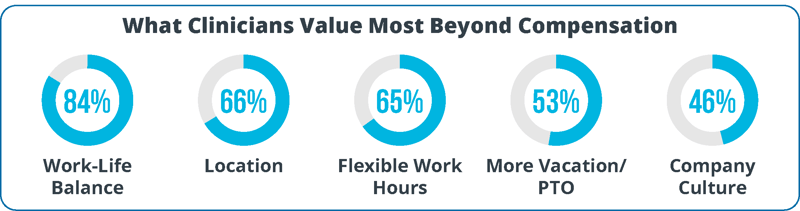
As workforce shortages persist, retention strategies need to account for more than pay alone. Flexibility, schedule, and the day-to-day work experience continue to influence whether clinicians stay or look elsewhere.
Radiologist Turnover Doubled in Recent Years, Adding Pressure to an Already Constrained Workforce
Radiologist turnover has increased sharply in recent years, creating additional strain for health systems already managing radiologist shortages, rising imaging demand, and burnout. According to a study published in the Journal of the American College of Radiology (JACR), job-switching rates among U.S. radiologists rose by more than 60% over the past decade.
Workload also appears to influence turnover. At lower levels, rising wRVUs reflect stronger staffing alignment and productivity, which is associated with lower turnover. Beyond that threshold, the workload becomes unsustainable, and turnover begins to climb. 
For healthcare leaders, these findings reinforce the value of workforce strategies that support both radiologist capacity and long-term sustainability as imaging demand continues to grow. 
Current Workforce Constraints are Expected to Intensify
Healthcare organizations are already operating in a constrained labor market, with physician shortages impacting access, capacity, and care delivery. Looking ahead, these challenges are expected to intensify. An aging population will drive higher demand, while a significant portion of the physician workforce approaches retirement age.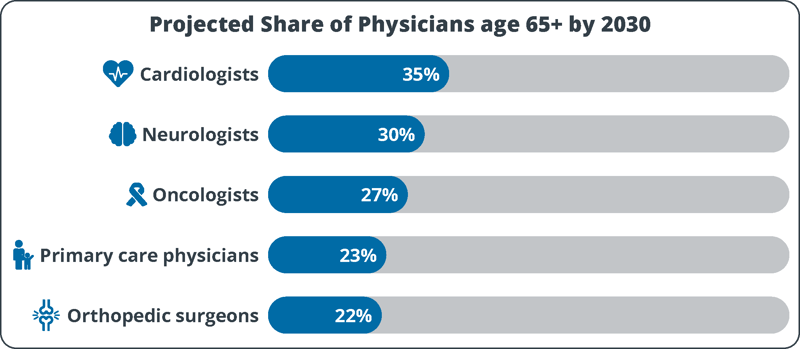
With 20% of the population projected to be Medicare-eligible seniors by 2030 and 23% of physicians expected to reach retirement age, the gap between supply and demand is set to widen, placing additional strain on an already-constrained workforce.
AI Scribes are Beginning to Deliver on What Clinicians Value Most
Physicians' interest in AI is closely tied to its potential to reduce administrative burden and improve the day-to-day experience of care delivery. In Doximity's State of AI in Medicine Report, nearly 70% of physicians said they were most excited about the prospect of less administrative work and better work-life balance.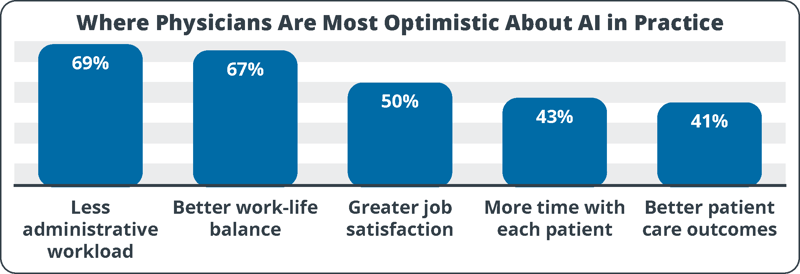
Early evidence suggests AI scribes are beginning to deliver on those priorities. A recent study published in JAMA found that clinicians using AI scribes spent less time in the EHR and on documentation, while also seeing modest increases in patient volumes.
For a more comprehensive look into these insights and trends and other key developments shaping healthcare this quarter, download the complete Q2 2026 Healthcare Market Report here.