
Access to OB/GYN care is becoming increasingly difficult to sustain, prompting healthcare leaders to adopt a more strategic approach to how services are delivered and supported. In many organizations, that shift is driving new approaches to workforce planning, care models, and long-term program stability.
Get a Data-Driven Look at the OB/GYN Shortage
Get a Data-Driven Look at the OB/GYN Shortage
By The Numbers: A Look at the OB/GYN Workforce
There are more than 49,000 OB/GYNs in the United States, with about 1,100 specializing in maternal-fetal medicine. 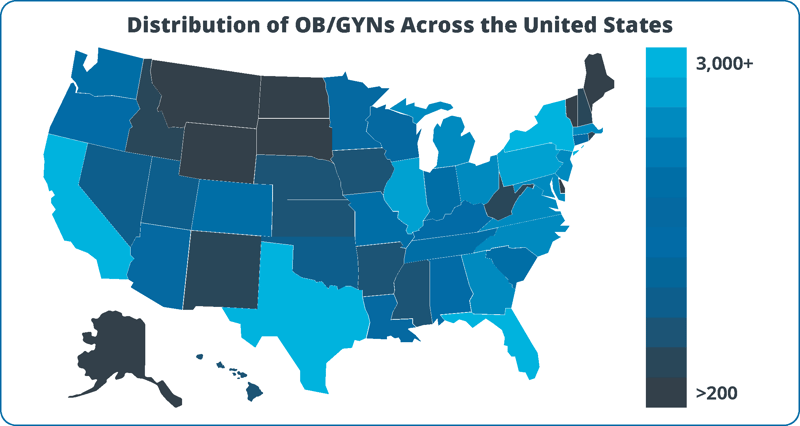
OB/GYN Hiring Trends: High Search Volumes Reflect Persistent Demand
Data from the Association for Advancing Physician and Provider Recruitment's (AAPPR) 2025 Benchmarking Report found that OB/GYNs (general) is among the top three most common physician searches, alongside hospital medicine and family medicine. AAPPR Benchmarking Data indicates that OB/GYN demand is widespread and difficult to address, with many healthcare organizations continuing to face open roles and extended time-to-fill. 
As reported in the 2025 AAPPR Benchmarking Report, OB/GYN (general) remained among the top 10 most searched specialties from 2019 through 2024, with its share of total physician searches increasing from approximately 4% in 2019 to nearly 8% in 2024, reflecting continued growth in demand.
Key Drivers: Factors Contributing to the OB/GYN Shortage
Limited Residency Positions: Slowing Pipeline Progression
Interest in obstetrics-gynecology continues to exceed the number of available residency positions, creating a persistent imbalance in the training pipeline. 
Although obstetrics-gynecology residency capacity has grown in recent years, the pace of expansion remains limited. With only about 9% growth in obstetrics-gynecology residency positions from 2022 to 2026, constrained training capacity continues to compound broader workforce pressures - including rising demand, provider burnout, and uneven geographic distribution - making it more difficult to alleviate the OB/GYN shortage.
Burnout Rates: Accelerating OB/GYN Attrition
Burnout continues to affect workforce stability in OB/GYN, adding pressure to a specialty already facing supply constraints. As workload and work-life strain persist, burnout may contribute to attrition and make it more difficult to retain physicians over time. 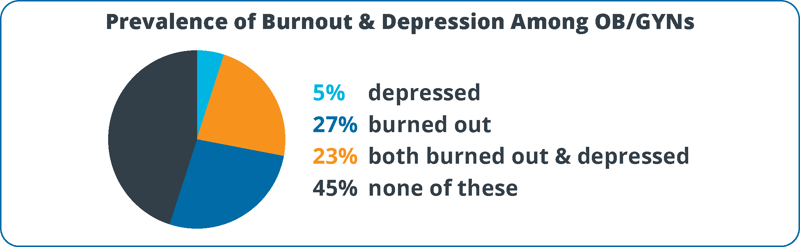
Over time, sustained burnout can have consequences beyond morale; it can accelerate turnover, increase retention risk, and further constrain an already limited OB/GYN workforce.
Maternity Service Closures: Creating Geographical Barriers to OB/GYN Care
Access to maternity care is becoming more limited across the United States as hospitals in both rural and urban communities scale back or close obstetric services. Since 2010, more than 500 U.S. hospitals have closed their obstetric units, according to a study published by JAMA Network Open, contributing to wider geographic gaps in access to OB/GYN care. 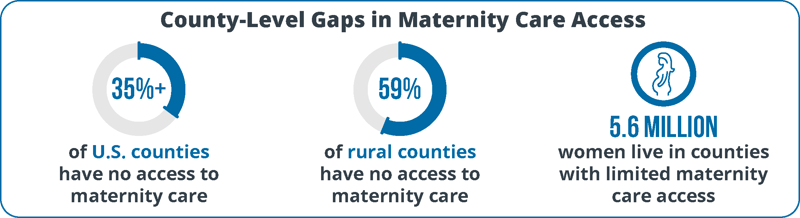
As more hospitals close their obstetric units and coverage becomes less consistent, the downstream effects are increasingly visible in regions now classified as maternity care deserts.
Actionable Strategies: Navigating the OB/GYN Shortage
Implement OB Hospitalist Models: Improving Access to Care
As healthcare organizations work to maintain OB/GYN coverage amid ongoing shortages, hospitals are increasingly adopting OB hospitalist models. 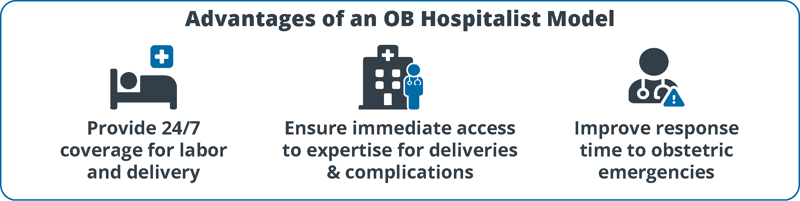
By dedicating OB/GYNs to the hospital setting, the model can help address coverage and access challenges while enabling other OB/GYNs to focus on outpatient care and scheduled procedures.
Utilize Locum Tenens OB/GYNs: Bridging Gaps in Coverage
OB/GYN locum tenens can help bridge immediate gaps in coverage and serve as a strategic workforce resource. Beyond filling vacancies, leaders can leverage locum tenens OB/GYNs to stabilize operations, support evolving care models, and maintain access while longer-term staffing strategies are implemented. 
For a comprehensive look into the factors contributing to the OB/GYN shortage and strategies to navigate it, click here.
Frequently Asked Questions About the OB/GYN Workforce:
How Many OB/GYNs Are in the United States?
There are more than 49,000 OB/GYNs in the United States.
How Many OB/GYNs Work Locum Tenens in the U.S.?
As of May 2026, approximately 11% of OB/GYNs either work full-time as locum tenens or alongside their permanent career.
How Many OB/GYNs Report Being Burnt Out?
Nearly 30% of OB/GYNs reported experiencing burnout, with 23% reporting experiencing both burnout and depression, according to Medscape's OB/GYN Mental Health and Well-Being 2025 Report.
Why Is There a Shortage of OB/GYNs?
The shortage of OB/GYNs is due to a combination of factors, including rural disparities, heightened burnout, limited residency positions, and other workforce pressures.
What Is a Maternity Care Desert?
According to the March of Dimes, a maternity care desert is defined as counties within the U.S. that do not have obstetric providers or facilities, such as hospitals or birth centers, that offer maternity care.
Which States Have the Highest Percentage of Maternity Care Deserts?
The states with the highest percentage of maternity care deserts include North Dakota, South Dakota, Oklahoma, Missouri, Nebraska, and Arkansas, according to data from the March of Dimes 2024 Maternity Care Report.