Medical conferences offer an opportunity to step into a focused environment built entirely around learning, connection, and professional growth. In just a few days, you can gain exposure to new research, hear practical insights from experienced clinicians, and exchange ideas with peers who understand the complexities of your specialty.
With full agendas and multiple sessions happening at once, the week can move quickly. Being intentional about how you approach each session and conversation helps ensure you return with meaningful takeaways and valuable connections. These five tips will help you make the most of your time and translate the conference experience into insights you can apply long after the event ends.
Five Tips for Physicians and Advanced Practitioners Attending Medical Conferences:
1.) Plan Ahead
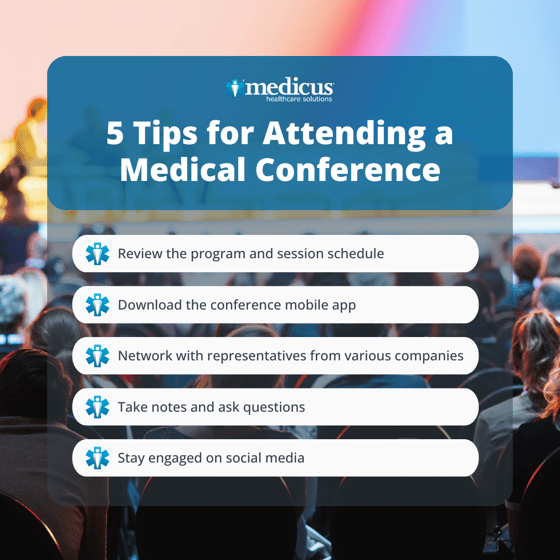
Before the conference begins, spend a few minutes reviewing the schedule and identifying the sessions, workshops, and keynote speakers that align with your goals. A helpful mindset is to prioritize what you truly want to learn, then build the rest of your agenda around that. If there are dinners, meetups, or small-group events you want to attend, registering early can make it easier to keep your schedule on track once the week gets busy.
2.) Download the Mobile App
Most medical conferences offer a mobile app, and it is worth downloading even if you prefer a paper schedule. The app usually makes it easier to find rooms, track session times, and navigate the exhibit hall. It can also be the quickest way to see last-minute agenda changes and receive real-time updates while you are on-site.
3.) Network
Making connections at medical conferences is essential, as it allows you to collaborate and share insights with other physicians and advanced practitioners in your field. While at the conference, visit the exhibit hall to meet representatives from various companies and learn more about what's happening in your industry and career options. As a bonus, the exhibit hall is typically filled with raffle prizes, activities, food, drinks, and giveaways you can bring home with you.
4.) Take Notes and Ask Questions
Conferences can bring a lot of information in a short period of time. Taking notes helps you hold onto key ideas and return to them when you are back in practice. Consider jotting down the most relevant takeaways from each session and one way you may want to follow up later, whether that means sharing a resource with a colleague, reading a study that was mentioned, or exploring a new approach to patient care. If a session includes Q&A, asking questions can also deepen your learning and help you make a memorable connection with the speaker.
5.) Stay Engaged on Social Media
Social media has become part of the conference experience, and LinkedIn is often where the professional conversation continues. Following the conference hashtag can help you find highlights from sessions you missed and connect with attendees you did not meet in person. Sharing one thoughtful takeaway from the event can also help your network understand what you are focused on this year.
Choosing the Right Medical Conference for Your Specialty
With so many medical conferences available, choosing the right one usually comes down to your goals. Some clinicians prioritize CME and clinical updates, while others are looking for hands-on training, leadership development, or time to reconnect with colleagues. It can help to ask peers what they found most valuable in past years and to check your specialty society’s official events calendar.
Many specialties host annual meetings that are widely recognized and well attended. If you are deciding which conference to prioritize, here are a few leading examples by specialty:
- Anesthesiology: ANESTHESIOLOGY® Annual Meeting hosted by the American Society of Anesthesiologists (ASA)
- Radiology: RSNA Annual Meeting
- OB/GYN: ACOG Annual Clinical and Scientific Meeting
- Gastroenterology: ACG Annual Scientific Meeting
Explore Locum Tenens Opportunities at Medical Conferences
Medical conferences also provide a unique opportunity for physicians and advanced practitioners to explore locum tenens careers. Here are some of the best practices for learning about locum tenens careers, as well as insights into locum tenens jobs at a medical conference:
- Visit Locum Tenens Agency Booths: Make it a point to visit booths of locum tenens agencies like Medicus within the exhibit hall. Engage in conversations with locum tenens recruiters and agency representatives to understand the benefits of working locum tenens jobs with their agency.
- Discuss Potential Locum Tenens Opportunities: Conferences can be a great time to discuss potential locum tenens jobs, the flexibility locum tenens offers, and how working locums can fit into your career goals. If a locum tenens agency you're interested in partnering with is there, conferences can also be a great time to learn about the diverse range of locum tenens jobs they have available, from short-term locum tenens jobs to longer commitments across various locations.
- Network with Locums: At the conference, connect with other locum tenens physicians and advanced practitioners. Some locum tenens agencies, like Medicus, often partner with these locums to be present at their booths, sharing firsthand experiences about the benefits of a locum tenens career. Engaging in these conversations can provide valuable insights into the locum tenens lifestyle and the professional advantages of locum tenens careers.
The Medicus team will be attending several medical conferences this year, including:
- American Association of Nurse Anesthesiology (AANA) Mid-Year Assembly
- American College of Cardiology (ACC) Annual Scientific Session & Expo
- Society of Breast Imaging (SBI) Breast Imaging Symposium
- American College of Obstetricians and Gynecologists (ACOG) Annual Congress
- Digestive Disease Week (DDW)
- American College of Surgeons (ACS) Clinical Congress
- American Association of Nurse Anesthesiology (AANA) Annual Congress
- American Society of Anesthesiologists (ASA) Annual Meeting
- Radiological Society of North America (RSNA) Annual Meeting
- and many more!
Attending a medical conference as a physician or advanced practitioner can be a transformative experience when approached with thoughtful preparation. By making a plan, actively participating in sessions, networking with peers, and staying engaged on social media, you can maximize the benefits of your attendance.
Remember to reflect on your experiences, follow up with new contacts, and apply the knowledge gained. By keeping these tips in mind, you will leave the medical conference inspired and connected with a diverse network of professionals in your field.
Want to know where you can connect with Medicus next? Fill out the form below to stay updated on upcoming medical conferences we’ll be attending.
Frequently Asked Questions About Attending a Medical Conference
What Should I do Before Attending a Medical Conference?
Before attending a medical conference, review the agenda, identify your priority sessions, and download the conference app if one is available. Planning ahead helps the week feel more focused and makes it easier to balance sessions, networking, and exhibit hall time.
What Should I Bring to a Medical Conference?
Common essentials include comfortable shoes, a portable charger, a notebook or note-taking app, business cards (or a QR code for LinkedIn), and a simple plan for your top sessions and exhibit hall time.
Can Medical Conferences Help me Find Locum Tenens Jobs?
They can. While the main purpose of medical conferences is education and connection within your specialty, many events include an exhibit hall where you can speak with a locum tenens agency in person. If you are curious about locum tenens jobs, it can be a convenient way to ask questions, understand current opportunities, and hear how locum tenens works from recruiters and clinicians attending the conference.
How Can I Network Effectively at Medical Conferences if I am Short on Time?
Try setting a small goal, like three meaningful conversations per day. The exhibit hall, poster sessions, and coffee lines often create low-pressure openings for introductions.
.png)