Blog Highlights
How Nurse Practitioners Are Expanding Access to Care
The Added Value of Locum Tenens Nurse Practitioners
Frequently Asked Questions About Nurse Practitioners
For more than 60 years, nurse practitioners (NPs) have played an essential role in expanding access to healthcare across the United States. What began as a response to gaps in primary care has grown into a profession of more than 461,000 licensed NPs, according to the American Association of Nurse Practitioners (AANP), who care for patients in nearly every specialty and clinical setting.
As their role has grown, so have the ways NPs choose to practice. Many now work locum tenens, bringing their expertise to the organizations and communities that need it while shaping careers that fit their goals.
How Nurse Practitioners Are Expanding Access to Care
With nearly 1 billion patient visits each year, nurse practitioners are an established part of healthcare delivery nationwide. From primary and specialty care to collaborative care models, their contributions help healthcare organizations meet a wide range of patient needs.
Filling Critical Needs in Primary and Specialty Care
As physician shortages continue to challenge healthcare organizations nationwide, NPs are helping maintain access to essential services, particularly in primary care, where they are the fastest-growing provider type. According to the American Association of Nurse Practitioners (AANP), 84% of NPs are certified in primary care, positioning them to meet a broad range of preventive and routine healthcare needs.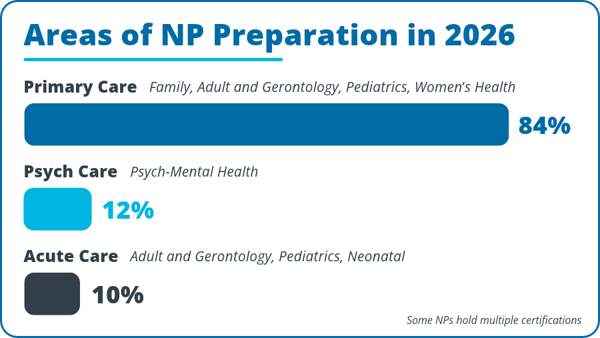
Within their areas of certification, NPs also contribute to key specialties, including oncology, surgery, and emergency medicine. By practicing across a range of clinical settings, NPs help maintain continuity of care.
Strengthening Access Across Care Settings
Nurse practitioners provide preventive, acute, and chronic care in hospitals, outpatient clinics, specialty practices, and community health centers. Their reach extends to patients with a variety of insurance coverage: 81% of NPs see privately insured patients, 76% see Medicare patients, and 74% see Medicaid patients, according to the AANP.
With the ability to manage a wide range of patient needs, NPs help patients receive care sooner and with fewer delays. Their emphasis on education and prevention helps patients stay engaged in their health, and in hospitals and specialty practices, they help coordinate care as patients move between providers and settings.
Enhancing Team-Based and Collaborative Care
Whether practicing independently or as part of an interdisciplinary team, nurse practitioners collaborate closely with physicians, nurses, and other clinicians to coordinate care, reduce bottlenecks, and improve outcomes. Their preventive focus and comprehensive approach to care make them central to advancing patient-centered, team-based models that expand access and improve quality.
Employment trends reflect the value NPs bring to healthcare teams. The U.S. Bureau of Labor Statistics projects a 41% increase in nurse practitioner employment, adding nearly 138,000 jobs from 2025 to 2035 as healthcare organizations increasingly rely on NPs to help care teams keep pace with patient demand.
The Added Value of Locum Tenens Nurse Practitioners
While nurse practitioners already play a vital role in care delivery, working locum tenens jobs enables them to expand their reach even further by strengthening clinical teams, supporting patient access, and helping healthcare organizations adapt to changing workforce demands.
How Nurse Practitioners Benefit from Working Locum Tenens
- Improve Work-Life Balance: Locum tenens jobs allow nurse practitioners to choose assignments that fit their preferred schedules, lifestyles, and personal goals, giving them more control over when and how much they work.
- Broaden Clinical Experience: By practicing in different settings and regions, locum tenens nurse practitioners have the ability to care for new patient populations, gain exposure to different approaches to care, and build adaptable clinical skills.
- Boost Earning Potential: High demand for nurse practitioners across various specialties and practice settings often creates opportunities for increased compensation compared to traditional employment models.
At Medicus Healthcare Solutions, we recognize that no two nurse practitioners have the same career preferences. Our team takes a personalized approach to connecting nurse practitioners with locum tenens jobs that match their professional interests, scheduling preferences, and long-term career aspirations, helping them make the most of the flexibility and experience locum tenens offers.
How Healthcare Organizations Benefit from Locum Tenens Nurse Practitioners
- Ensure Continuity of Care: Whether covering planned absences, open positions, or fluctuations in patient volumes, locum tenens nurse practitioners help healthcare organizations maintain clinical coverage and minimize disruptions to patient care.
- Expand Access: In rural and underserved areas with limited care options, locum tenens nurse practitioners can bring needed clinical support to communities, helping more patients receive timely preventive, acute, and chronic care.
- Support Clinician Well-Being: Staffing gaps often leave full-time clinicians with heavier workloads and little opportunity to step away. By covering time off or sharing patient loads, locum tenens nurse practitioners help teams recharge, reduce burnout, and maintain a more sustainable pace.
From maintaining day-to-day coverage to addressing evolving workforce needs, locum tenens nurse practitioners can play an important role in a healthcare organization's staffing strategy. At Medicus, we work alongside organizations to understand their staffing priorities and connect them with high-quality locum tenens nurse practitioners who align with clinical teams and support continued access to patient care.
Frequently Asked Questions About Nurse Practitioners
When Is National Nurse Practitioner Week?
National Nurse Practitioner Week takes place November 8–14, 2026. Celebrated annually during the second week of November, NP Week recognizes nurse practitioners' contributions to healthcare delivery, raises awareness of their role in expanding access to care, and celebrates their dedication to patients and communities nationwide.
What Is a Locum Tenens Nurse Practitioner?
A locum tenens nurse practitioner is a licensed NP who works temporary jobs at healthcare organizations, covering clinician absences, open positions, or shifts in patient volumes to ensure patients maintain access to care.
How Many Nurse Practitioners Are There in the United States?
Over 461,000 nurse practitioners are licensed in the United States, according to the AANP.
How Many Nurse Practitioners Work Locum Tenens Jobs?
According to Medicus’ proprietary data, more than 20,300 nurse practitioners (about 4%) have worked or currently work locum tenens jobs as of November 2026.
How Long Does It Take for a Nurse Practitioner to Obtain a New State License?
Nurse practitioner licensure timelines and fees vary, with the time to obtain a new license ranging from two weeks to six months depending on the state.
What States Can Nurse Practitioners Practice Independently?
To date, 27 states, Washington, D.C., and two U.S. territories grant nurse practitioners full practice authority, according to the AANP. This designation allows NPs licensed in these states and jurisdictions to practice with full autonomy, which includes the ability to evaluate patients, diagnose conditions, prescribe medications and controlled substances, develop treatment plans, and more.
Can Nurse Practitioners Prescribe Medication?
Yes, according to the AANP, nurse practitioners hold prescriptive privileges, including controlled substances, in all 50 states and Washington, D.C.
What Is the APRN Licensure Compact?
The APRN Licensure Compact is an interstate agreement that will allow nurse practitioners licensed in one participating state to practice in other member states with ease. Once enacted, this agreement will simplify the licensing process, helping to reduce costly delays and make it easier for nurse practitioners to provide quality care wherever patients need it most.