Physician coverage decisions are becoming increasingly consequential for health systems. When the right clinical capacity is not available, the impact can extend across patient access, service-line performance, referral volume, and financial results. At the same time, adding coverage without a clear understanding of demand can increase costs without solving the larger workforce challenge.
For CEOs and CFOs, the challenge is no longer simply how to fill open positions. It is how to build a physician workforce strategy that protects clinical capacity today while positioning the organization for what comes next.
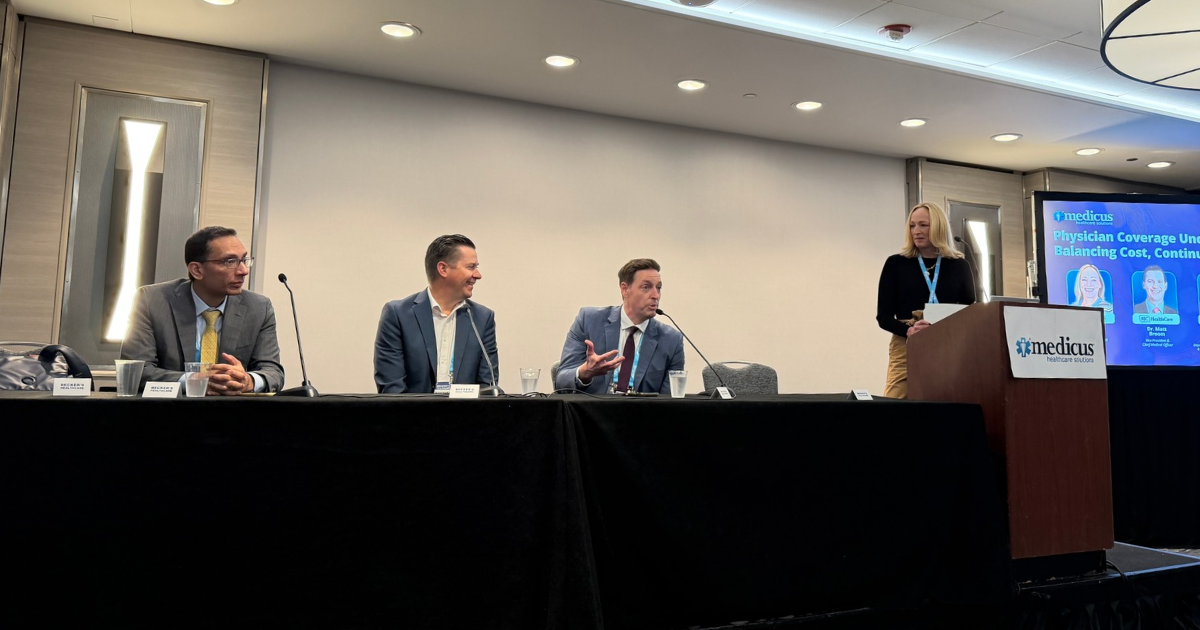
At Becker’s 14th Annual CEO + CFO Roundtable, Medicus Healthcare Solutions hosted a panel discussion, Physician Coverage Under Pressure: Balancing Cost, Continuity, and Access. The discussion explored how health system executives are addressing physician coverage pressures today while building toward more sustainable workforce strategies for the future.
Moderated by Shannon Peterson, Senior Vice President at Medicus, the discussion featured:
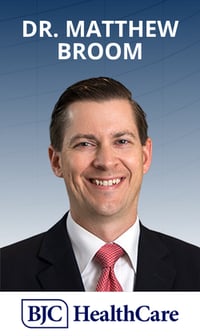
- Dr. Matthew Broom, Vice President and Chief Medical Officer, BJC Medical Group
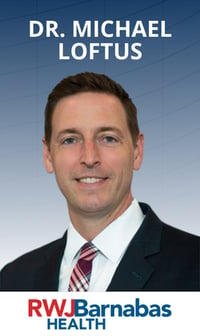
- Dr. Michael Loftus, Senior Vice President for System Medical and Academic Affairs, RWJBarnabas Health; Chief Medical and Quality Officer, Cooperman Barnabas Medical Center
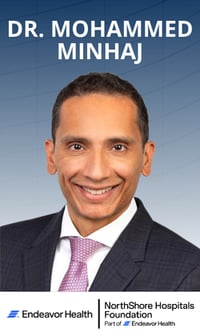
- Dr. Mohammed Minhaj, Harris Family Foundation Chair, Department of Anesthesiology, Critical Care, and Pain Medicine, NorthShore, Swedish, and Northwest Community Hospitals, Endeavor Health
Their experiences across cardiology, radiology, anesthesia, and other specialties point to a broader shift in physician workforce planning: coverage can no longer be managed one vacancy at a time. Health systems must understand their workforce vulnerabilities, where clinical capacity creates the most value, and how solutions like the Medicus Transition Program can help maintain continuity while building toward a more sustainable workforce model.
Four Key Takeaways from the Medicus Session at Becker’s CEO + CFO Roundtable
1. Identify Physician Workforce Risk Before It Disrupts Clinical Operations
Current staffing levels do not always show where future coverage risks exist. In highly specialized services, one or two physicians may be responsible for essential coverage, making a single departure enough to disrupt a service line or limit patient access.
Dr. Loftus shared an example from his organization, where a radiologist who was the only physician reading certain nuclear medicine studies decided to retire early. The issue extended beyond replacing one physician. The organization risked losing a specific clinical capability without another physician positioned to take it on.
"You can have a very large medical group, but if you've got one person who covers ENT for one of your community hospitals, that departure can have a significant impact on your operation," Dr. Loftus explained.
Workforce demographics add another layer of complexity. Dr. Minhaj described a bimodal anesthesia workforce, with many anesthesiologists and CRNAs over 55 or under 35, leaving fewer midcareer professionals to fill leadership and mentorship roles. Both groups value flexible schedules, making it important to consider staffing approaches that can help experienced clinicians extend their careers while attracting those entering the field.
The strategic question extends beyond how many positions are open today. Health systems that understand which services depend on a limited number of clinicians, where retirements could affect coverage, and where specialized expertise lacks a clear successor have more time to address those risks before patient care or operations are affected.
2. Use Interim Staffing to Maintain Coverage During Workforce Transitions
Changing physician staffing models involves more than securing new clinicians. Healthcare leaders must balance immediate coverage needs with long-term workforce goals, often while navigating contract negotiations, operational changes, and recruitment. Having an interim coverage strategy in place can provide the stability needed to move forward without disrupting patient care.
At Cooperman Barnabas Medical Center, an established outsourced radiology group faced recruitment challenges and growing imaging backlogs. Medicus provided interim coverage as a neutral third-party partner, helping stabilize the approximately 25-physician group while the health system negotiated its transition to an employed model. Ultimately, every physician joined the health system as an employee, an outcome Dr. Loftus described as highly successful eight months into the transition.
“I think being able to bring in a neutral third party that could provide some of that backup and support allowed us to negotiate in good faith with them and ultimately bring them in-house," Dr. Loftus said.
Dr. Minhaj offered an additional perspective on leveraging the Medicus Transition Program to implement an anesthesia care team model. With roughly three months to secure coverage across more than 30 daily locations at Northwest Community Hospital, his team relied on locum tenens clinicians while updating bylaws to include CRNAs, establishing new leadership, and recruiting full-time staff.
3. Align Physician Coverage with Patient Demand and Service Line Strategy
Limited physician supply makes every coverage investment more consequential. Adding clinicians where demand does not support the investment can increase costs, while insufficient coverage can constrain access, delay care, and put referral volume at risk.
Across BJC Health's network of academic, community, and critical access hospitals, Dr. Broom emphasized understanding the actual FTE need in each community and evaluating specialty coverage through the lens of the broader health system's capabilities.
“Understanding what the actual FTE need for that community is, and then think at a system lens of, you know, maybe not every place should have TAVR, maybe not every place should be a spine center, maybe not every place should do advanced endoscopy. How do we practice smarter so that when we do have to find interim staffing solutions, we can do it with fiscal responsibility, but also the right thing for the community,” Dr. Broom explained.
His point reframes physician coverage as a system-level capacity decision. Maintaining every specialty at every facility may not deliver the strongest clinical or financial outcome. Evaluating demand across the network can help determine where services should be maintained locally, where resources can be shared, and where specialized care can be concentrated without compromising access.
Dr. Minhaj pointed to a hospital performing about 40 open-heart surgeries annually that requested year-round cardiac anesthesia coverage, even though another hospital just 15 minutes away performed more than 200 cases. At Northwest Community Hospital, his team took a closer look at surgical block utilization and case volumes to identify opportunities to better align anesthesia coverage with demand.
4. Recruiting & Retaining Clinicians Comes from Shared Incentives, Training Programs, and Culture
Long-term workforce stability requires more than recruiting additional clinicians. Healthcare leaders must also consider how organizational culture, clinician engagement, and training opportunities influence their ability to retain existing talent and develop the next generation of clinicians.
Dr. Broom stressed the value of identifying potential signs of disengagement before they lead to departures. His team has been developing indicators based on patient interactions and experience, mentorship participation, and use of clinical technology to help leadership recognize when additional support may be needed.
For Dr. Minhaj, retention depends on creating an environment where physicians and CRNAs feel supported and aligned with the organization's goals. He described how shared incentives and a collaborative relationship between the anesthesia department and hospital contribute to a culture focused on long-term success.
“The culture of being part of a group that really cares about each other, being part of a group that really feels the value from the hospital, not just being told this is how many rooms you have to cover, this is how many people you need, but rather it's a shared partnership and a shared model of success, I think allows us to not only recruit outstanding talent but also retain them,” Dr. Minhaj explained.
Beyond retention, the panelists highlighted the importance of developing recruitment pipelines for the next generation of clinicians through education and training programs.
Dr. Minhaj shared his organization's example: three of the first four SRNAs who completed clinical rotations at Northwest Community Hospital accepted positions there. Similarly, Dr. Loftus discussed an anesthesiology residency program at his organization that recently signed ten residents from its graduating class.
Looking Ahead: The Future of Physician Coverage
As the discussion concluded, panelists were asked what would need to change for healthcare to win the workforce challenge.
Dr. Loftus hoped for “fewer surprises” in workforce planning, Dr. Broom envisioned greater collaboration among traditionally competing health systems, and Dr. Minhaj emphasized continued growth in clinical education and training programs.
Together, their perspectives reinforce the need for healthcare organizations to think beyond traditional recruitment and take a more proactive approach to workforce planning, one that anticipates coverage risks, adapts to evolving clinical needs, and supports long-term workforce stability.
Planning a Clinical Workforce Transition?
For more than two decades, the Medicus Transition Program has supported health systems through complex workforce changes, providing interim clinical coverage as organizations transition between staffing models, restructure existing programs, or build permanent teams.
Complete the short form below to discuss your organization’s workforce goals and how Medicus can help maintain continuity through the transition.