
Physician burnout remains one of healthcare's most persistent workforce challenges, affecting physician retention, staffing stability, patient access, and organizational performance. As healthcare organizations respond to workforce shortages and growing care demands, leaders are recognizing that preventing burnout requires a proactive workforce strategy.
While there is no single solution, healthcare organizations making the greatest progress recognize that physician burnout is shaped by the systems, staffing decisions, and workplace environment physicians experience every day. By taking a more intentional approach to workforce planning, healthcare leaders can better support physicians while strengthening workforce stability and protecting patient access.
Three Strategies Healthcare Leaders Can Use to Reduce Physician Burnout
Provider burnout is a complex challenge with no one-size-fits-all solution. Yet organizations making measurable progress often share a common approach: they prioritize practical strategies that better support clinicians and reduce unnecessary strain. Here are three strategies healthcare leaders can implement to help reduce physician burnout.
1. Prioritize Communication and Strengthen Culture
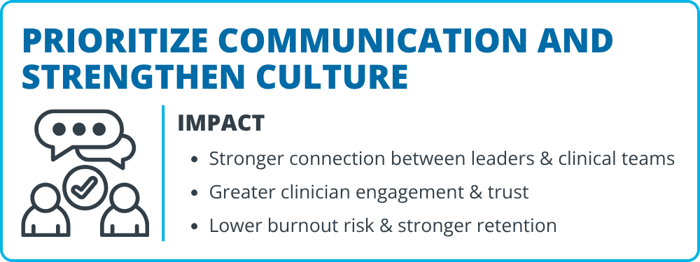 Burnout is often felt on the front lines before it appears in turnover data, vacancy reports, or patient access challenges. For healthcare leaders, that makes communication more than an engagement strategy. It is a way to stay connected to the pressures clinicians are experiencing in real time.
Creating consistent opportunities for feedback, whether through town halls, pulse surveys, department check-ins, or one-on-one conversations, can help leaders identify where strain is building and where support may be needed. These conversations also give clinicians a clearer voice in the decisions that affect their schedules, workflows, and day-to-day practice environment.
When clinicians feel heard and see that their feedback leads to action, culture becomes a stronger part of the retention strategy. Leaders gain better visibility into team dynamics, while clinicians are more likely to feel connected to the organization and supported by leadership.
That connection matters as work-life balance becomes a greater priority across the clinical workforce. In a competitive labor market, cultures that value clinician input, support schedule flexibility, and address workload concerns can help organizations reduce the risk of burnout while strengthening recruitment and retention.
2. Create a Flexible Staffing Model and Address Staffing Needs
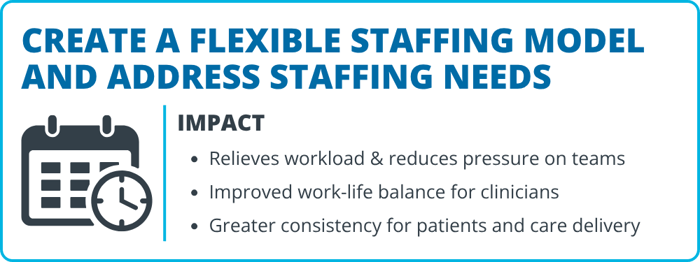 Staffing shortages and excessive workloads are two of the biggest drivers of physician burnout. When clinical teams are stretched too thin, workloads increase, time off becomes harder to take, and work-life balance becomes more difficult to maintain. Leaders feel that pressure as well, often having to make urgent coverage decisions that can stretch existing teams or disrupt care delivery.
Just as communication helps leaders see where pressure is mounting, flexible staffing helps create the capacity to respond. A more adaptable staffing model can support manageable schedules, planned time off, and greater consistency for both clinicians and patients.
Healthcare organizations are approaching flexibility in several ways, including capping work hours, planning for seasonal fluctuations, redesigning shifts, expanding hybrid options where appropriate, and building coverage plans that support PTO.
Flexible staffing does more than relieve short-term pressure. When designed intentionally, it can help reduce burnout risk, support retention, and show clinicians that well-being is part of the organization’s long-term workforce strategy.
3. Leverage Locum Tenens Providers as an Extension of Your Team
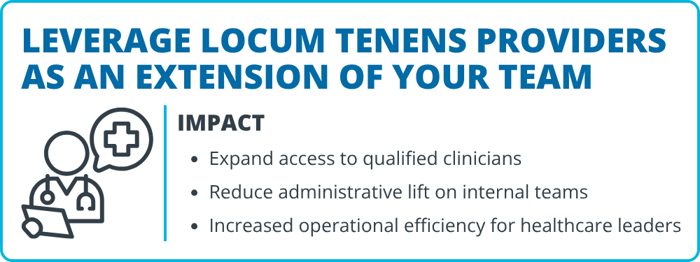
Even with strong communication and flexible staffing plans in place, healthcare organizations may still face periods when internal teams need additional support. Open searches, rising patient volumes, planned absences, service line changes, and unexpected turnover can all add pressure to already stretched teams.
Locum tenens coverage can help leaders create the additional capacity needed during those moments, reducing the risk of burnout. When used strategically, locum tenens physicians and advanced practitioners can help protect time off, maintain patient access, and reduce pressure on core clinical teams while longer-term workforce plans are underway.
Burnout does not affect every specialty in the same way. For a closer look at the specialties reporting the highest levels of burnout and the workforce trends contributing to broader physician shortages, explore our U.S. physician shortage report.
Why Partner with Medicus as Your Trusted Locum Tenens Agency
Reducing physician burnout requires more than filling open shifts. It requires a workforce partner that helps healthcare organizations build more resilient staffing strategies.
As one of the nation's largest locum tenens agencies, Medicus partners with healthcare employers to deliver flexible physician staffing solutions that support both immediate coverage needs and long-term workforce goals.
For larger or longer-term locum tenens staffing needs, the Medicus Transition Program provides project-based interim coverage for multi-FTE gaps, including periods of increased patient volume, unexpected turnover, or staffing model changes. This solution helps healthcare organizations maintain continuity while working toward a more sustainable staffing model.
MedicusOne further supports locum tenens workforce management by centralizing staffing through one accountable VMS and MSP platform. With clearer visibility into coverage, spend, and performance, healthcare leaders can make more informed staffing decisions and improve oversight without adding unnecessary complexity.
Whether an organization needs short-term coverage, long-term interim staffing, or centralized workforce management, Medicus can help leaders build staffing strategies that support clinicians, reduce administrative strain, and protect access to care.
Looking for a locum tenens agency to support your workforce strategy? Complete the form below to connect with a Medicus workforce specialist and learn how flexible physician staffing can help reduce burnout while maintaining continuity of care.
Frequently Asked Questions About Reducing Physician Burnout
What Causes Physician Burnout?
Physician burnout can be caused by several factors, including high workloads, staffing shortages, limited schedule flexibility, administrative burden, and lack of input in decisions that affect day-to-day practice. Over time, these pressures can affect morale, retention, patient access, and overall workforce stability.
Common causes of physician burnout include staffing shortages, excessive workloads, administrative burden, limited schedule flexibility, inefficient workflows, and a lack of physician input into operational decisions.
How Can Healthcare Leaders Reduce Physician Burnout?
Healthcare leaders can help reduce physician burnout by creating clear communication channels, listening to clinician feedback, supporting more flexible staffing models, and addressing workload concerns before they escalate. Burnout prevention is most effective when it is treated as part of a broader workforce strategy rather than a standalone wellness initiative.
Healthcare employers that prioritize proactive workforce planning and staffing flexibility are often better positioned to reduce physician burnout while improving physician retention and patient access.
How Can Locum Tenens Physicians Help Reduce Physician Burnout?
A locum tenens agency helps reduce physician burnout by making it easier for healthcare organizations to secure qualified clinical coverage when permanent teams need additional support. By filling staffing gaps quickly, locum tenens providers help stabilize workloads, protect physician time off, and maintain continuity of care while reducing administrative strain for healthcare leaders.
What Does a Locum Tenens Agency Do?
A locum tenens agency connects healthcare organizations with qualified physicians and advanced practitioners for temporary staffing needs. In addition to recruiting clinicians, many agencies, including Medicus, manage licensing, credentialing, scheduling, travel, and onboarding, helping healthcare leaders maintain patient access while reducing the administrative burden of workforce management.
How Can a Locum Tenens Agency Help Mitigate Physician Burnout?
A locum tenens agency can help mitigate burnout by making it easier for healthcare organizations to secure qualified coverage when internal teams need support. The right locum tenens agency, like Medicus, can assist with sourcing, scheduling, licensing, credentialing, travel, and onboarding, reducing the administrative lift for leaders while helping protect time off, stabilize workloads, and maintain patient access.
Which Physician Specialties Have the Highest Burnout Rates?
While physician burnout affects every specialty, some experience significantly higher rates than others due to workforce shortages, patient demand, and operational pressures. Specialties such as emergency medicine, OB/GYN, oncology, radiology, and others consistently rank among those reporting the highest levels of burnout.
For a closer look at physician burnout by specialty, workforce shortages, and national physician supply trends, download our U.S. Physician Shortage Report.