If you’ve thought about locum tenens but aren’t sure how it would fit into your life, you’re not alone. Many CRNAs picture locum tenens as an all-or-nothing move: leave your job, pack a bag, and hit the road. In reality, locum tenens jobs can look very different depending on your goals, your family, and your stage of career.
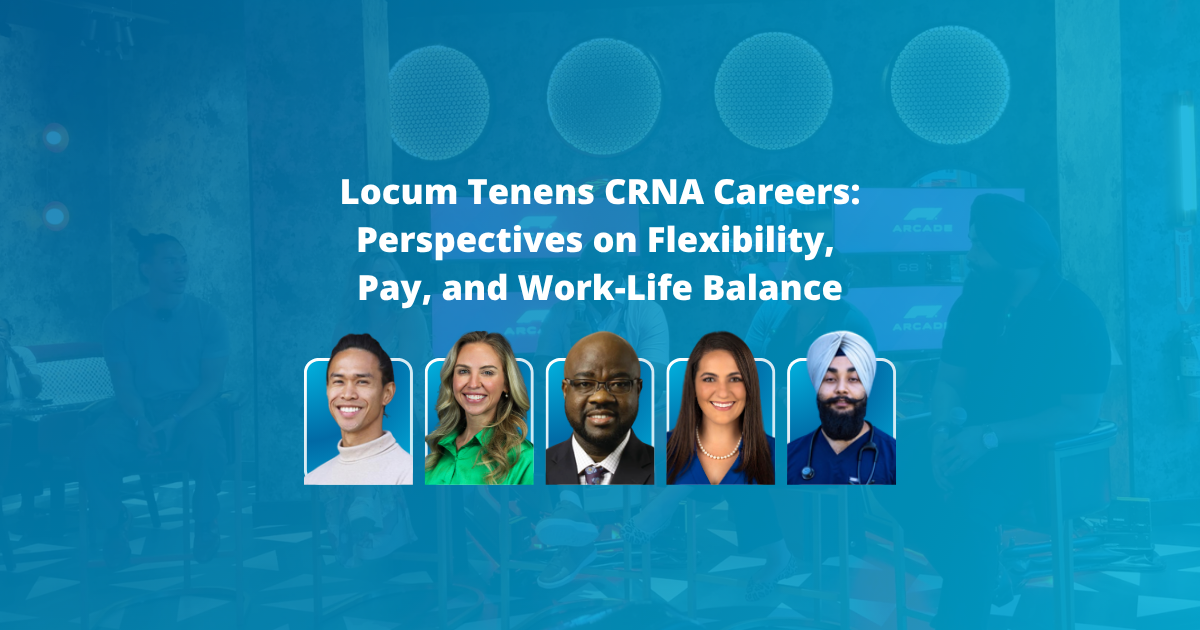
During a panel discussion held at a CRNA networking event during the AANA Annual Congress, three CRNAs and one SRNA shared their experiences with locum tenens, providing firsthand insight into the flexibility, career growth, and opportunities the practice model can offer.
More Freedom to Build Life Around Your Career
Missed holidays, family events, and time with friends are familiar trade-offs for many CRNAs doing work they care deeply about. Eventually, though, enough missed moments can change the way you think about work and what you want your career to give back.
That was the case for Amber and Vinny, both CRNAs, who reached a point where having more control over their time mattered just as much as the work itself.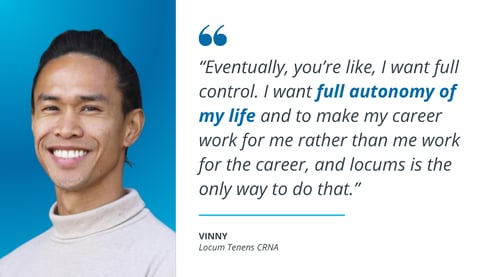
They made the leap to full-time locum tenens with Medicus in 2021, and the flexibility quickly opened up a very different kind of career. Their locum tenens CRNA jobs have taken them across nearly every part of the country, where they have worked with different care teams, experienced new practice environments, and built relationships with CRNAs nationwide. At the same time, having more control over when and where they worked gave them room for life outside of medicine too, from paying off their student loans in a year to competing together on The Amazing Race.
A few years later, they still value that freedom, just for different reasons.
With a baby on the way, Amber and Vinny are thinking less about where locum tenens can take them and more about the time it can give them back.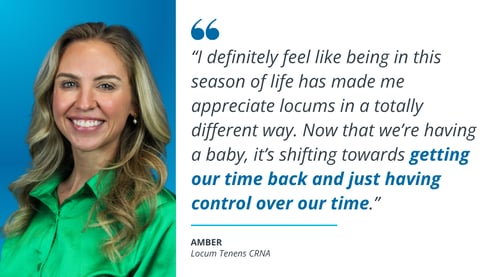
Rather than having a maternity leave or PTO policy determine when she returns, Amber can decide when she is ready to take another locum tenens CRNA job. The flexibility that once made it easier for the couple to travel is now giving them more freedom to slow down, stay home, and decide what comes next on their own terms.
Locum Tenens Can Complement the Career You Already Have
Of course, wanting more from your career does not always mean wanting to leave the job you already have.
Andrew enjoys his permanent role, so locum tenens has never been an either-or decision for him. For the past six years, he has worked locum tenens alongside his W-2 position, using the additional work to supplement his income while keeping the stability and routine that already work for his family.
“It’s another way you can actually expand more and do it more on the spot to supplement your actual W-2 income,” Andrew shared. “It’s a win-win for me, and I’m happy to do it all the time.”
He has also found a way to make locum tenens fit without turning work into constant travel. Rather than taking locum tenens jobs across the country, Andrew focuses on opportunities close to home.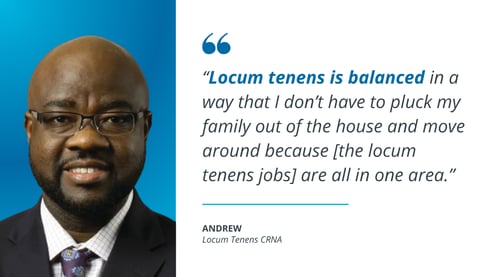
That distinction matters for CRNAs who may be interested in locum tenens but have ruled it out because they picture weeks away from home or a complete career change. Locums can be those things, but it can also be a few locum tenens assignments that fit around an existing job and help someone work toward a financial goal without changing everything else that already works.
For Andrew, that is exactly the appeal. Locum tenens did not replace the career he had built. It gave him another way to use it.
Sometimes Locum Tenens Helps You Figure Out What Comes Next
Sarah’s experience took a different turn. She had spent much of her career looking for better work-life balance, which eventually led her to working CRNA locum jobs with Medicus. The flexibility was part of what drew her in, but over time, the experience gave her something she had not expected: a much clearer sense of what she wanted in a permanent role.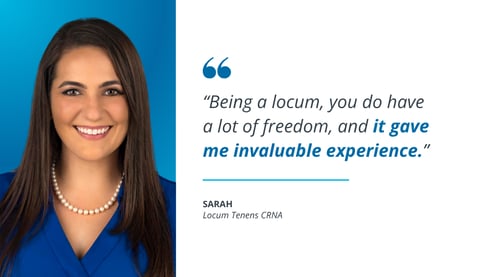
One of those locum tenens jobs eventually led her to the place she wanted to stay.
Instead of trying to understand a workplace through a few interviews, Sarah spent more than a year actually working inside the organization. She had time to see how the team operated, experience the culture firsthand, and understand whether the opportunity offered the kind of flexibility and room to grow she had been looking for.
“I had a chance to be at the facility for over a year, learn the culture, learn it was positive, that I had the ability to grow, and there was flexibility that I didn’t expect,” Sarah explained. “It ended up being a great fit, but I was able to experience that before I committed because of locums, and that was a benefit I didn’t expect.”
That is a different kind of flexibility than simply choosing when or where to work. Locum tenens gave Sarah the time and experience to make a more informed decision about what she wanted next, rather than committing first and figuring it out later.
A Different Way to Think About the Beginning of Your Career
For Taranjeet, an SRNA preparing for his boards, the discussion opened up a different possibility altogether.
He already knew work-life balance mattered to many of the SRNAs preparing to enter the workforce alongside him.
“I know a significant number of friends who are going into the workforce, and they value work-life balance substantially,” Taranjeet explained.
What he had not necessarily considered was where locum tenens might fit into that conversation. Like many providers early in training, he had viewed locums as something more common among experienced CRNAs.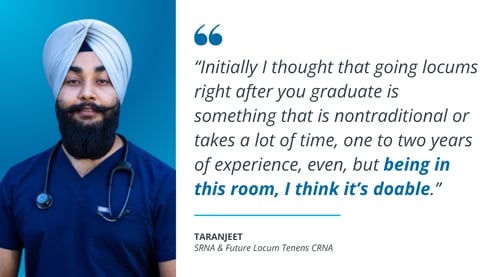
Hearing how other CRNAs had built locums into very different stages of their careers gave him a broader picture of what the path could look like. What stood out to him was not only the schedule flexibility, but also the opportunity to keep learning by working in different environments.
“I think you have to try locums if you want to be a lifelong learner,” Taranjeet shared.
Every facility has its own teams, workflows, systems, and ways of practicing, which means each locum tenens job offers something new to adapt to and learn from. For someone at the beginning of a career, that kind of exposure can help shape not only clinical confidence, but also a better understanding of what they want their career to become.
Finding a Locum Tenens Partner Who Understands What You Want
One of the biggest takeaways from the discussion was that no two CRNAs define career success the same way.
Some CRNAs are looking for greater flexibility. Others want supplemental income, new clinical experiences, or a clearer path forward. The role locum tenens plays in a CRNA career is personal, which is why finding the right opportunities starts with understanding what matters most to each CRNA.
At Medicus, that conversation comes first. Rather than taking a one-size-fits-all approach, Medicus works closely with CRNAs to understand their goals and identify CRNA locum tenens opportunities that align with them. Dedicated credentialing and travel teams then help support every step of the process, allowing CRNAs to focus on what they do best.
“I just want to make a special shout-out to Medicus,” Vinny shared. “They have credentialing coordinators and travel coordinators. This is truly a white-glove experience when you’re with them. I mean, we tried every anesthesia agency and group out there, and there is nothing like Medicus.”
Whether you're exploring your first CRNA locum tenens job, looking to supplement your income, or seeking greater flexibility as your priorities evolve, the right locum tenens agency partner can make all the difference.
Interested in exploring locum tenens CRNA jobs with Medicus? View our open locum tenens CRNA jobs or complete the short form below to connect with a Medicus recruiter.