From Early Inspiration to Hospital Medicine: How Locum Tenens Shaped My Hospitalist Career
Long before seatbelts were standard, six-year-old Mark Andrew got his first close-up look at what physicians can do. Riding home from kindergarten, he leaned against the car door. It popped open, and he fell out. When his mother slammed on the brakes, his ankle was pinned beneath the tire. In the aftermath, an orthopedic surgeon repaired the injury so completely that Mark grew up able to run, train, and live without limitations.
That experience stayed with him, not as a story about an accident, but as a moment when he realized the power of medicine.
“My six-year-old subconscious mind must have clicked and realized there could be no more rewarding career than being a physician,” Mark shared.
Nearly five decades after that accident, he has built a fulfilling career in hospital medicine, helping others reclaim their health and momentum, much like the surgeon once did for him.
Discovering Hospital Medicine
Dr. Andrew often says he "stumbled into hospital medicine," but the turning point came when he made a decision that reshaped his career path.
While completing fellowship training in New Orleans, his mother fell ill back home in Atlanta. He decided to return home, step away from the fellowship, and find a role that would let him continue practicing while staying close to support her.
That search led him to locum tenens and, soon after, to his first hospital medicine locum tenens job in Dallas, Georgia, at a community hospital in need of support. From day one, the pace was fast, and the learning curve was steep. Dr. Andrew remembers focusing on the essentials: understanding the system quickly, taking good care of patients, and keeping the day moving.
"It was intense but invigorating,” he said. “I instantly loved the wide variety of cases that I got to see.”
What surprised him most was how meaningful his first locum tenens job felt. He was not just covering shifts. He was helping stabilize care, expand access for patients, and support a health system in need of coverage.
That first locum tenens job did more than introduce him to hospital medicine. It revealed a career model that combined impact, autonomy, and purpose, and it became the foundation of the work he continues to do.
Finding Freedom and Variety as a Locum Tenens Hospitalist
Dr. Andrew first took on locum tenens work in 2003. Even after spending time in a few permanent roles, he kept finding his way back to locum tenens, not because he was looking to leave something behind, but because the lifestyle fit the way he wanted to practice and live. For him, it came down to autonomy.
"I love the freedom and flexibility I get in locum tenens work," he shared.
That freedom showed up in practical ways. While caring for his mother, the flexibility of locum tenens allowed him to adjust his schedule and take time off as needed to be with her. Later, it meant he could step away for an entire month to take his nieces to France for a graduation trip, without navigating approvals or coverage negotiations.
Clinically, the variety of hospital medicine locum tenens jobs has been just as important. Each locum tenens job comes with its own patient needs, workflows, and team dynamics, and Dr. Andrew credits the steady change in clinical settings with sharpening his skill set and keeping him engaged in the work.
"I’m always learning new things about medicine," he explained.
Easing Into Retirement with Locum Tenens
After years of working as a locum tenens hospitalist, Dr. Andrew is starting to get a new question more often: when he plans to retire. He understands why people ask, but his answer is rarely a date. For him, the work still feels personal, and he still feels the weight of what it means to show up for patients on hard days.
"When I start my car at the end of every shift, I know that no matter how it went, I did my best to try to make someone's life better. Nothing could be more fulfilling than that. As I start to think about retiring, I'm very concerned about what life will be like without those fulfilling moments. It is my purpose," he explained.
That is what makes the idea of stepping away more complicated than people expect. Rather than stopping all at once, Dr. Andrew is thinking about retirement the same way he has approached the rest of his career: with flexibility, intention, and room to adjust. Locum tenens gives him a way to scale back gradually while staying connected to medicine in a way that still feels meaningful.
"Locums will allow me to very gradually work less and less, yet still stay active in the medical practice, which I want to do to keep myself fulfilled," he shared.
Exploring the Benefits of Locum Tenens Outside the Hospital
Outside the hospital, Dr. Andrew has used locum tenens to lean into one of his favorite pursuits: travel.
"One of my favorite things about the locum life is how I've used the travel experiences to see the corners of the U.S. that I never would have sought out had it not been for my locum tenens assignments," he explained.
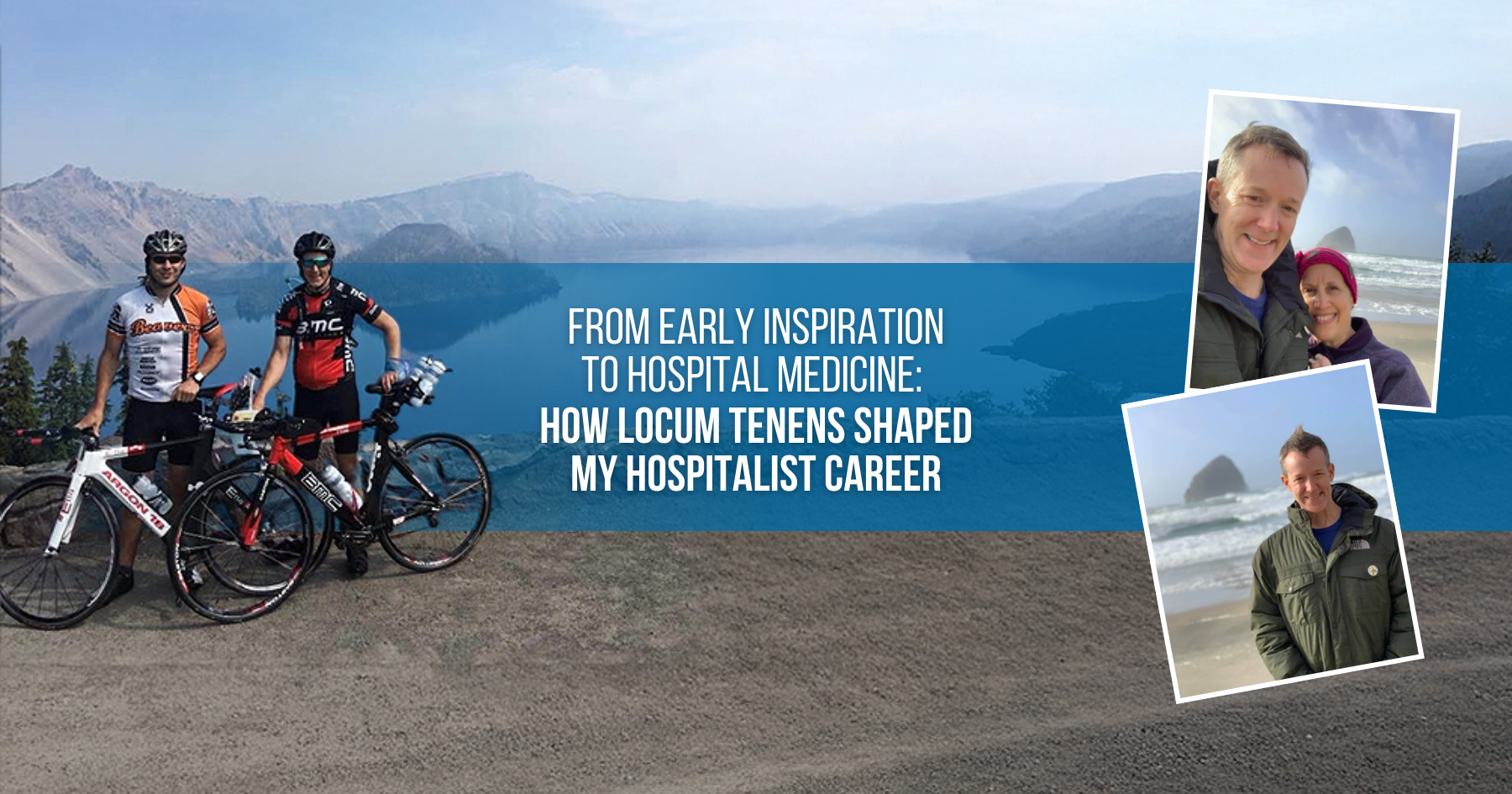
Hospital medicine locum tenens jobs have brought him within reach of places like Crater Lake, Haystack Rock, Deception Pass, Mackinac Island, and coastal Maine, turning time off into real opportunities to explore.
Staying active is part of that rhythm, too. A three-time Ironman triathlete who has completed 11 marathons, Dr. Andrew enjoys discovering the swimming, biking, running, yoga, and gym options in each new locum tenens location, building training into the same travel that locum tenens makes possible.
Sharing Advice for Other Locum Tenens Hospitalists
When hospitalists ask Dr. Andrew about working as a locum tenens, he offers this advice:
"Keep an open, flexible mind,” he shared, referring to exploring locations and facilities outside your usual clinical setting.
He has seen how quickly a locum tenens job can surprise you when you are willing to try a setting that is not your obvious first choice. He accepted a locum tenens job in a small community that he has now returned to for more than a decade. Early in the pandemic, he also stepped into a COVID unit role, an experience that was challenging and deeply meaningful.
Just as important, he points to the relationships that shape every shift.
"The quickest, surefire route to success at any assignment is to build a genuine alliance and show the bedside nurses and staff that their input is vital,” he said.
Approaching each facility with humility and respect helps locum tenens physicians integrate quickly, strengthen care teams, and ultimately support better patient care.
Continuing a Career That Leaves Room for What Is Next
Nearly five decades after that childhood injury, Dr. Andrew is still drawn to the same thing that first made medicine feel powerful: helping people get back to their lives. Locum tenens has given him the flexibility to keep doing that work with intention, while also creating space for the life he wants outside the hospital. Today, he continues to practice as a locum tenens hospitalist with Medicus, building a career shaped by purpose, autonomy, and a long-term commitment to hospital medicine.
Interested in working hospital medicine locum tenens jobs with Medicus? View our open locum tenens jobs here, or complete the short form below to connect with a Medicus recruiter.
* Please note that pseudonyms are used to protect the privacy of those featured.