The U.S. continues to face a projected physician shortage in the coming years, particularly across primary care and several high-demand specialties, including radiology and anesthesia. Against that backdrop, the 2026 Match results offer a clear view into how the future workforce is taking shape and where shortages remain.
2026 Match Day Overview
The 2026 Main Residency Match was the largest in history, reflecting continued expansion in training opportunities.
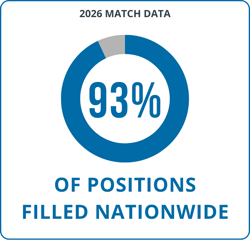
41,482 positions were filled, which points to strong overall placement and continued growth in graduate medical education, even as gaps remain in key specialties and underserved areas.
What This Means for the Future Physician Workforce
While the Match shows growth in both applicants and positions, the data also highlights ongoing misalignment between where physicians are needed most and where they are choosing to train.
Primary Care: Persistent Gaps Despite Growth
Primary care specialties offered more than 20,700 positions, the largest share of the Match. However, fill rates declined slightly overall, driven largely by family medicine, where:
- The fill rate dropped to 83.6%
- Nearly 900 positions remained unfilled
This signals a continued challenge in building the primary care pipeline, even as patient demand increases. Fewer physicians entering these fields can directly impact access to care, particularly in underserved and rural communities.
Specialty Demand Continues to Shift
Growth in specialties such as psychiatry and emergency medicine reflects trends seen within this year’s Match data:
- Psychiatry expanded programs and positions while maintaining a high fill rate, aligning with increased demand for behavioral health services
- Emergency medicine saw growth in both positions and matched applicants, despite some fluctuation in fill rates
Beyond the Match results, broader workforce trends continue to point to shortages across several key specialties. Explore the white papers below for deeper insights into these shortages:
These specialties continue to experience pressure from increasing patient volumes, procedural demand, and workforce attrition, factors that are not fully offset by current training output.
How Locum Tenens Fits Into Your Workforce Plans
As physician shortages persist, health systems are increasingly relying on flexible staffing models to maintain access to care, especially in high-need specialties and underserved areas.
Locum tenens plays a key role in this environment by helping:
- Fill coverage gaps created by unfilled positions or physician shortages
- Support patient care in regions with limited access to specialists
- Provide continuity while organizations recruit for permanent roles
For physicians, locum tenens work can offer a way to:
- Gain experience across different practice settings and geographic locations
- Step into high-demand specialties where coverage is urgently needed
- Build flexibility into early career decisions after residency or fellowship
In a workforce environment where demand continues to outpace supply in certain areas, locum tenens is becoming an increasingly relevant part of how care is delivered and how physicians navigate their careers.
Congratulations, Residents!
Match Day represents the culmination of years of hard work, perseverance, and commitment. It is a moment to recognize what you have accomplished and to look ahead to the training and opportunities still to come.
Whether you're a physician exploring new opportunities or a healthcare organization seeking coverage, connect with our team to learn how locum tenens can support your goals.
Frequently Asked Questions
What is Match Day?
Match Day is when medical students and residency applicants find out where they will complete their residency training.
- When it happens: The 3rd Friday of March
- What it represents: The transition from medical school to physician training
- How it works: Applicants and residency programs submit ranked preferences through the NRMP, and a matching algorithm pairs them
- Part of Match Week: Earlier in the week, applicants learn if they matched—on Match Day, they learn where
- If you don’t match: You can still secure a position through the Supplemental Offer and Acceptance Program (SOAP)
For many, it’s one of the most important milestones in a medical career, marking years of work and the start of hands-on clinical training.
How many applicants participated in the 2026 Match?
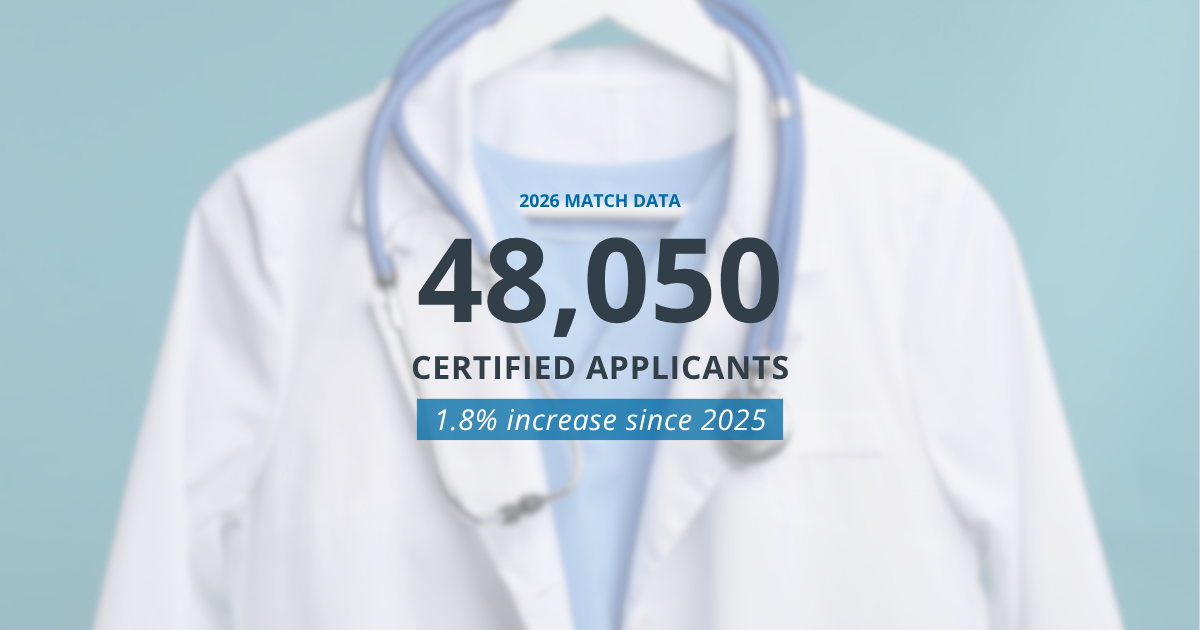
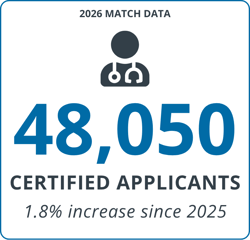
In the 2026 Match, 53,373 applicants registered, with 48,050 active applicants submitting rank order lists, an increase of 1.8% from 2025.
How many applicants matched in the 2026 Match?
During the 2026 Match, 38,354 applicants secured PGY-1 positions. Across both PGY-1 and PGY-2 levels, a total of 41,482 positions were filled.
What were the match rates for U.S. MD and DO seniors in the 2026 Match?
In the 2026 Match, U.S. MD seniors achieved a 93.5% match rate, while U.S. DO seniors reached a record-high 93.2% match rate.
How many residency positions were offered and filled in the 2026 Match?
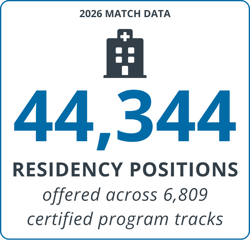
The 2026 Match offered 44,344 residency positions across 6,809 programs, with 93.5% (41,482 positions) filled.
How did primary care specialties perform in the 2026 Match?
In the 2026 Match, primary care specialties offered 20,712 positions and achieved a 92.1% fill rate, a slight decline from the previous year.
Why are primary care positions still going unfilled?
Despite offering the largest number of positions, primary care—especially family medicine—continues to see lower fill rates. Factors such as compensation, workload, and physician preference for subspecialties contribute to this ongoing challenge.
Which primary care specialty had the lowest fill rate in the 2026 Match?
Family medicine had the lowest fill rate in the 2026 Match at 83.6%, leaving 899 positions unfilled despite an increase in available roles.
Which primary care specialties performed well in the 2026 Match?
In the 2026 Match, Internal Medicine-Pediatrics achieved a 100% fill rate, while internal medicine and pediatrics maintained strong but slightly declining fill rates.
What trends are emerging from the 2026 Match data?
The 2026 Match shows continued growth in applicants and positions, but also highlights ongoing gaps in primary care and disparities among applicant groups.
What is being done in response to the 2026 Match trends in family medicine?
Following the 2026 Match, a Blue Ribbon Panel will be convened to examine family medicine recruitment challenges, training pathways, and long-term workforce alignment.
Did the 2026 Match help solve the physician shortage?
While the Match shows growth in both applicants and training positions, it does not fully address the physician shortage. Key gaps remain, particularly in primary care and certain high-demand specialties.
Which specialties are seeing the most demand in the 2026 Match?
Specialties like psychiatry and emergency medicine continue to grow, reflecting rising demand. Other areas, including anesthesiology, radiology, OB/GYN, and surgery, also face ongoing workforce pressures due to patient demand and provider attrition.
Why is there a mismatch between training and workforce needs?
Physicians often choose specialties and locations based on personal and professional preferences, which may not align with areas experiencing the greatest need, such as rural communities or primary care fields.
What should healthcare organizations take away from the 2026 Match data?
Organizations should recognize that while training capacity is growing, workforce gaps remain. Strategic staffing approaches, including flexible models, are essential to maintaining consistent patient access.

.png)