In the emergency department (ED), every second counts, yet rising patient demand, overcrowding, and prolonged boarding are putting increasing pressure on care delivery. As these challenges intensify, healthcare leaders are being asked to maintain access, support their workforce, and keep patients moving through already strained systems. Understanding what is driving these pressures, and which strategies can help address them, is becoming essential to the future of emergency care.
Download the Complete Report for Insights into the Rising Demands for Emergency Care
Download the Complete Report for Insights into the Rising Demands for Emergency Care
By the Numbers: A Snapshot of the Emergency Medicine Workforce
Over 69,700 emergency medicine physicians practice in the United States, including more than 2,400 who specialize in pediatric emergency medicine.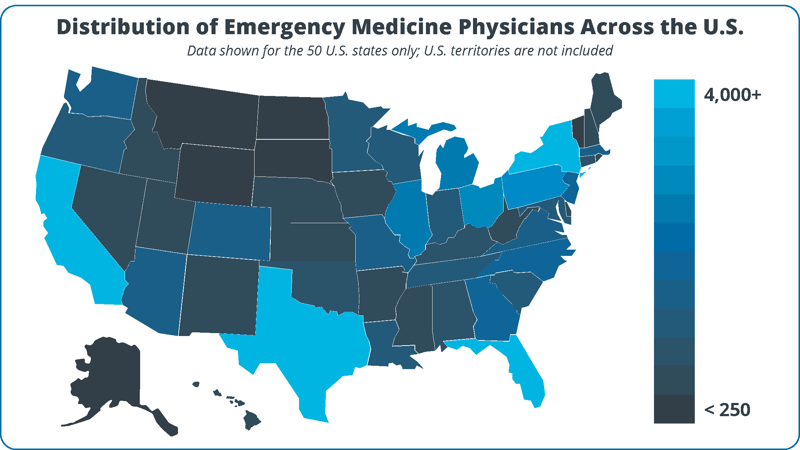
Nationally, Medicus' proprietary data show about 21 emergency medicine physicians per 100,000 people, though concentration varies considerably by state and jurisdiction.
Emergency Medicine Locum Tenens: A Look at the Interim Workforce
Among the emergency medicine workforce, more than 14,400 physicians have worked locum tenens at some point in their careers, either alongside their permanent role or as a standalone career. 

The Emergency Medicine Pipeline: 2026 Match Trends
The 2026 National Resident Matching Program (NRMP) results highlighted continued growth in emergency medicine training capacity and sustained interest in the specialty. Emergency medicine programs offered 130 more PGY-1 residency positions than in 2025 and drew 3,616 applicants.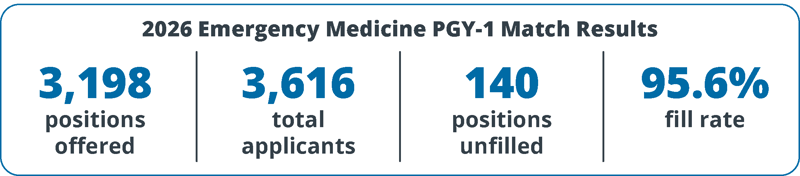
Emergency medicine residency fill rates remain high, with more applicants matching into emergency medicine than ever before in 2026, supported by a rise in MD and DO matches. Still, 140 positions remained unfilled, more than double last year's 65.
Key Drivers: Factors Behind the Increasing Demand
Physician Shortages: Downstream Effects on Emergency Department Utilization
Widespread physician shortages, particularly in primary care and psychiatry, can limit patients' access to timely care and increase reliance on emergency departments. The effects of these shortages can be seen in Health Professional Shortage Areas (HPSAs), which HRSA defines as geographic areas, populations, or facilities where the clinician supply is insufficient to meet the population’s healthcare needs.
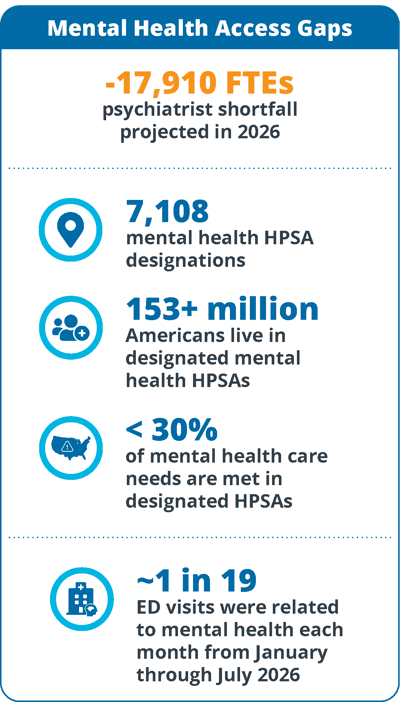
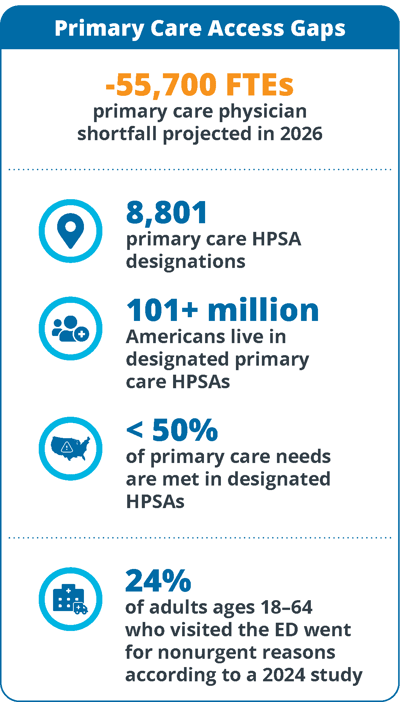
While shortages across many specialties affect ED demand, primary care and psychiatry are among the largest contributors. Together, they show how gaps elsewhere in the healthcare system can ultimately shift more demand to emergency departments.
Rural Access Gaps: Sustained Pressure on Emergency Care
More than 100 rural hospitals have closed over the past decade, leaving over 4 million Americans without local emergency and inpatient care. Since 2023, another 53 have converted to Rural Emergency Hospitals (REHs), maintaining emergency services but requiring inpatient admissions to be transferred elsewhere.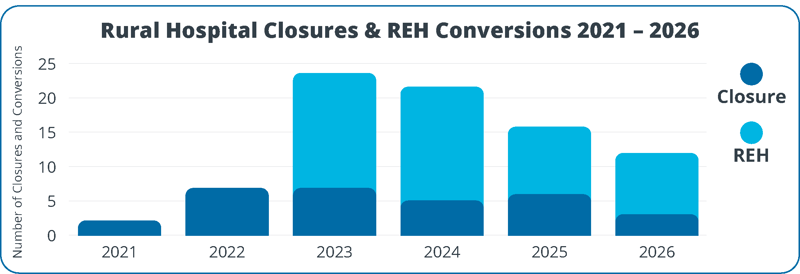
Maintaining access is also a workforce challenge in rural communities. While the overall emergency medicine workforce remains relatively steady, supply in non-metro areas falls well short of projected demand.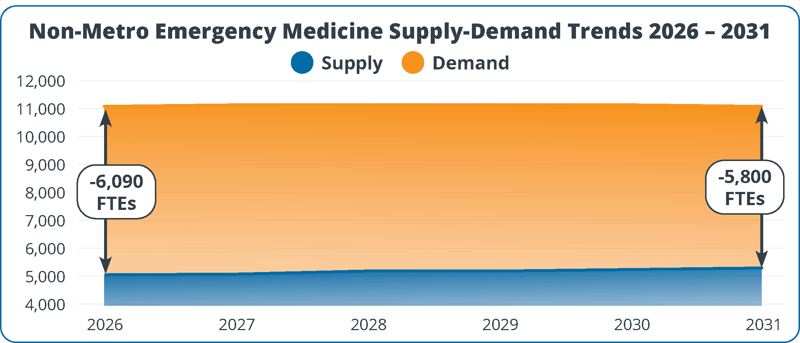
By 2031, non-metro physician supply is projected to meet only about half of demand. As hospital closures, REH conversions, and workforce shortages reduce local access to care, surrounding hospitals may face additional pressure from emergency visits, admissions, and transfers.
Emergency Department Boarding & Visit Times: A Systemwide Challenge
Patient demand continues to exceed available inpatient beds. When combined with rising case complexity and patient volumes, these pressures are fueling overcrowding and extended ED boarding times.
ED Visit Time Reflects Throughput Delays
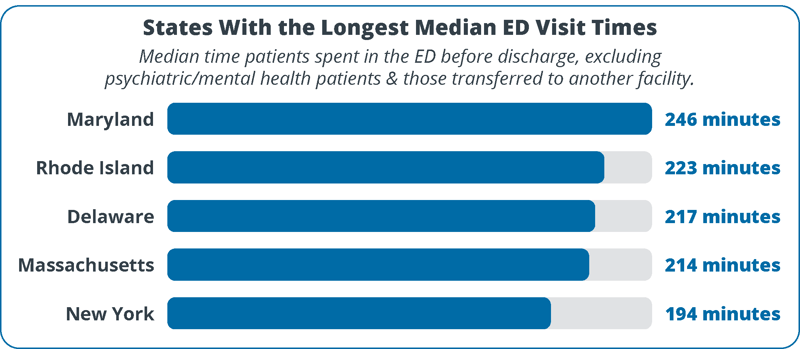
2026 national data show how much time patients now spend in the emergency department, an indicator that reflects growing delays in both care delivery and patient throughput.
Boarding Extends Delays for Admitted Patients
As emergency department visits continue to rise, limited inpatient capacity is contributing to prolonged ED boarding, leaving admitted patients waiting hours for an available bed. 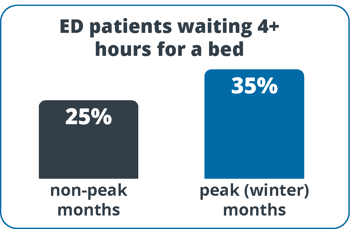 Extended boarding does more than lengthen a patient’s ED stay. When admitted patients remain in the department waiting for an inpatient bed, treatment spaces stay occupied longer, limiting the ED’s ability to accommodate new arrivals and increasing pressure on physicians, nurses, and hospital resources.
Utilization Trends: The Emergency Department Over the Next Decade
Emergency department pressures are expected to intensify over the next decade, with sustained strain across emergency and inpatient care settings.
Higher hospital occupancy, rising patient volumes, and uneven capacity across states suggest some states may feel added strain sooner than others.
Actionable Approaches: Strategies for Strengthening Emergency Care Delivery
Support Physician Well-Being: Incorporate Retention Measures
With burnout and/or depression affecting most of the emergency medicine workforce, safeguarding work-life balance is essential to maintaining a stable, effective workforce.



Implementing burnout mitigation strategies that support physician well-being can strengthen workforce retention, improve recruitment efforts, and ensure patients continue to have reliable access to emergency care.
Incorporate Artificial Intelligence (AI): Strengthen ED Capabilities
AI adoption is rapidly transforming healthcare, and incorporating AI into ED operations can help improve efficiency, reduce wait times, and limit the risk of bottlenecks.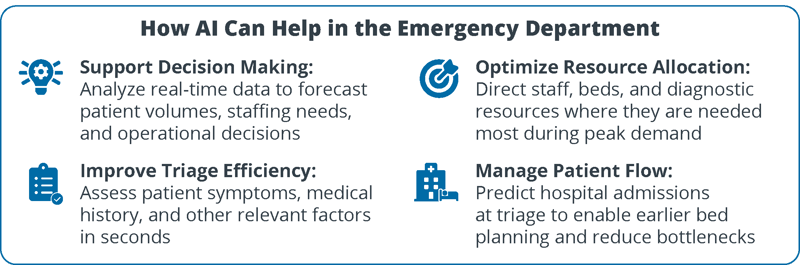
As AI becomes more widely adopted in emergency departments, it can complement clinical expertise, enhance operational efficiency, and improve patient outcomes, offering a valuable tool to support emergency medicine physicians.
Leverage Emergency Medicine Locum Tenens: Bridge Gaps in Clinical Coverage
As demand for emergency medicine physicians persists, healthcare organizations are increasingly adopting flexible staffing models to maintain access to care. As a result, locum tenens emergency medicine physicians have evolved from a temporary solution to a core workforce component.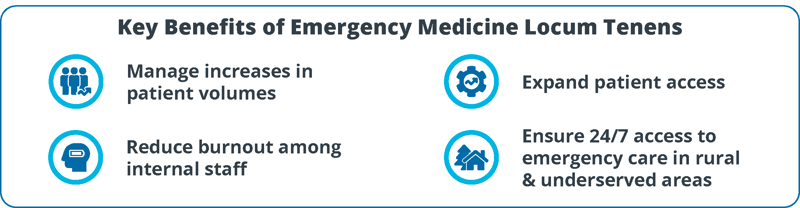
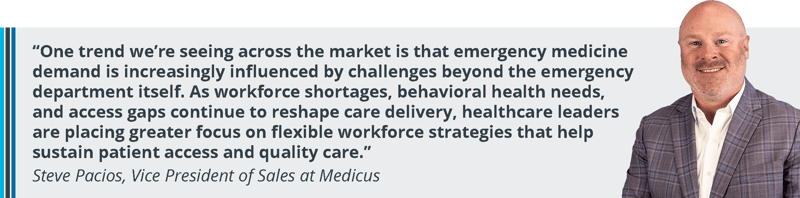
Centralize Locum Tenens Management: Implement MedicusOne
Managing locum tenens staffing across multiple vendors, departments, and systems can create unnecessary complexity and limit visibility. MedicusOne brings staffing operations under one accountable model, helping organizations streamline coverage management, improve cost control, and support consistent access to quality clinicians.
Frequently Asked Questions: Emergency Medicine Demand
How Many Emergency Medicine Physicians Are in the United States?
Over 69,700 emergency medicine physicians practice in the United States, including more than 2,400 who specialize in pediatric emergency medicine.
How Many Emergency Medicine Physicians Work Locum Tenens in the U.S.?
Based on Medicus' proprietary data, as of October 2026, more than 14,400 emergency medicine physicians work or have worked locum tenens at some point in their careers.
What States Have the Fewest Emergency Medicine Physicians Per 100,000 People?
Nebraska, Kansas, North Dakota, and Arkansas are among the states with the fewest emergency medicine physicians per 100,000 people.
What's Driving the Rising Demand for Emergency Medicine Physicians?
Physician shortages, gaps in rural access, rising patient volumes, higher-acuity cases, and ED boarding are contributing to growing pressure on emergency care.
What Is Causing Emergency Department Boarding?
ED boarding occurs when patients who have been admitted remain in the emergency department while waiting for an inpatient bed. High hospital occupancy, staffing shortages, rising patient volumes, and limited inpatient capacity can all contribute.
How Can Healthcare Organizations Ensure Access to Emergency Medicine Amid Rising Demand?
Healthcare organizations can use a mix of recruitment, retention, workforce planning, and flexible staffing strategies, including locum tenens, to help maintain coverage and patient access.