What does the next chapter look like for ambulatory surgery centers (ASCs)? By most signs, it’s one of continued growth. More than 80% of surgeries are now performed in an outpatient setting, and federal policy continues to expand the procedures ASCs can perform. Growth, though, brings its own set of challenges, from rising demand to the clinicians needed to meet it. Understanding the forces shaping the market will be essential to strengthen workforce planning, support operational performance, and sustain access to care.
Access the Complete Report to Explore ASC Market Trends and Workforce Insights
Access the Complete Report to Explore ASC Market Trends and Workforce Insights
The ASC Landscape: Market Overview
The U.S. ASC market continues to expand, with around 10,900 ASCs operating nationwide, according to Medicus' proprietary data as of October 2026.
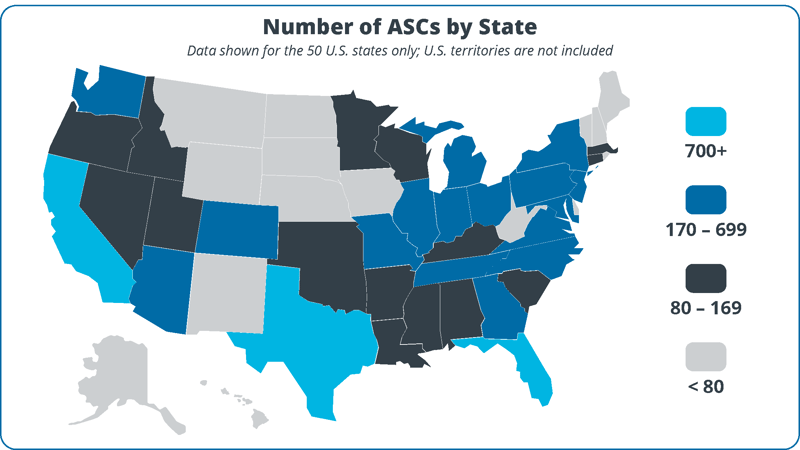
ASC concentration varies considerably by state. On a per capita basis, Maryland, Georgia, Idaho, and Arizona have the most ASCs per 100,000 residents.

ASC Ownership: Physician, Hospital, and Corporate Models
ASC ownership remains highly fragmented, with physicians maintaining a significant presence alongside health systems and corporate partners.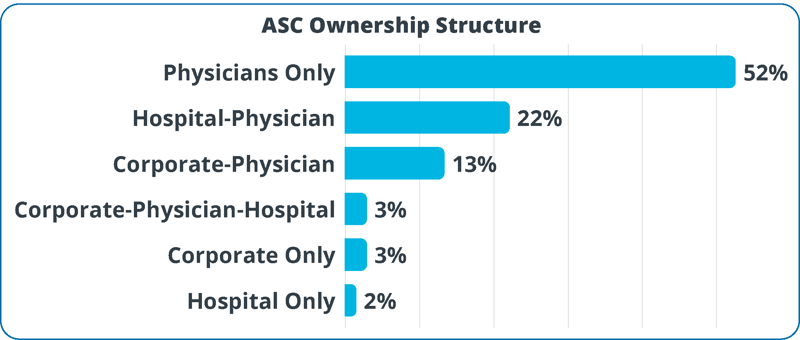
As health systems and corporate partners expand their presence in the ASC market, joint ventures are creating new opportunities for collaboration, investment, and outpatient service line expansion.
ASC Operations: Surgical Capacity and Specialty Mix
ASCs performed an estimated 35.7 million procedures over the past 12 months, according to Medicus' proprietary data. Supporting that volume are thousands of operating and procedure rooms that form the infrastructure for continued outpatient growth. 
Gastroenterology and ophthalmology account for the highest procedure volumes, offering a closer look at where outpatient surgical activity is concentrated. Beyond these established specialties, ASCs are expanding into additional areas of care. Cardiology, in particular, is emerging as a significant area of growth, with cardiovascular ASC volumes projected to grow 15% between 2023 and 2028 according to a study published in the Journal of the American College of Cardiology (JACC).
Outpatient Demand: Growth Projections and Market Drivers
Specialty Demand: Projected Growth Across Key ASC Service Lines
Overall outpatient volumes are projected to increase 20% between 2026 and 2036, driven in part by the continued migration of care to ambulatory settings. 
Demographic, clinical, and policy trends all point to sustained growth in procedural demand across ambulatory care settings in the years ahead.
Clinical Workforce Shortages: Implications for ASC Operations
As procedures continue to shift into outpatient settings, the supply of clinicians needed to staff ASCs is not keeping pace. National workforce projections point to clinician shortages across several specialties that contribute to ASC case volume. 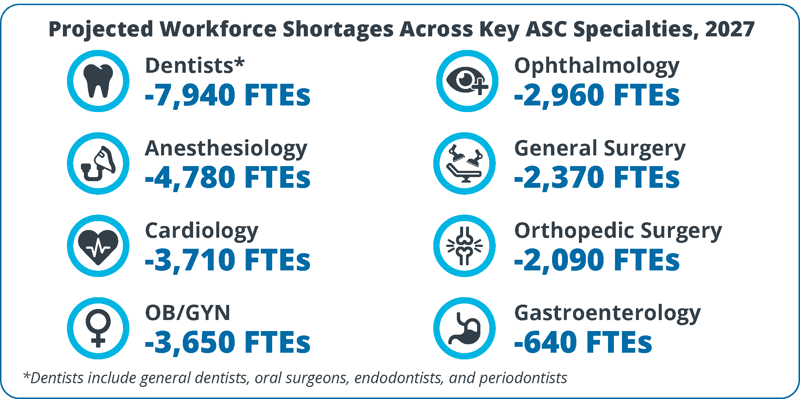
Workforce shortages extend beyond physicians to the support staff ASCs rely on. Surgical technologists, radiologic technologists and technicians, for example, are each projected to see a shortfall of more than 3,000 FTEs in 2027. 
Anesthesia Clinician Shortages: Effects on Surgical Capacity
Among the clinical workforce challenges facing ASCs, anesthesia shortages present a particularly significant operational risk. Since anesthesia services support a large share of ASC procedures, shortages of anesthesiologists and CRNAs threaten an ASC's ability to keep schedules full and rooms running. 
Unlike shortages within individual specialties, insufficient anesthesia coverage can affect multiple service lines simultaneously, extending the consequences of workforce gaps across the ASC. 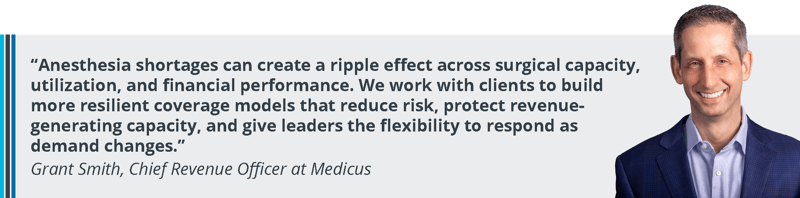
Locum Tenens: Supporting Capacity, Continuity, and Growth
As clinician shortages continue to challenge ASC leaders, flexible staffing models can provide another lever for maintaining capacity and responding to evolving workforce needs. 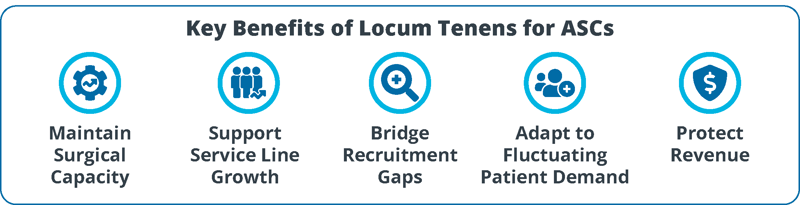
Locum tenens can help ASCs address coverage gaps, maintain surgical capacity, and adapt their workforce as patient demand and service lines evolve.
Simplify Locum Tenens Management: MedicusOne
Managing locum tenens staffing across multiple vendors, departments, and systems can create unnecessary complexity and limit visibility. MedicusOne brings staffing operations under one accountable model, helping ASC leaders streamline coverage management, improve cost control, and support consistent access to quality clinicians.
Frequently Asked Questions About the ASC Market
How Many ASCs Are in the U.S.?
According to Medicus' proprietary data, there are around 10,900 ASCs operating nationwide as of October 2026, with concentration varying considerably by state.
Which States Have the Most ASCs Per Capita?
Maryland has the highest concentration, with about eight ASCs per 100,000 residents, followed by Georgia, Idaho, and Arizona.
Who Owns ASCs?
Roughly 90% of ASCs have some degree of physician ownership, and 52% are owned by physicians only.The remaining ASCs are owned through partnerships with hospitals and corporate entities, or by hospitals or corporations alone.
How Many Surgeries Are Performed in Outpatient Settings?
Today, more than 80% of surgeries are now performed in outpatient settings.
What Workforce Shortages Are Affecting ASCs?
National projections point to 2027 shortages across several specialties that contribute to ASC case volume, including anesthesiology, cardiology, ophthalmology, general surgery, orthopedic surgery, and gastroenterology. Support roles such as surgical technologists are also projected to face significant shortfalls.
How Can Locum Tenens Help ASCs?
Locum tenens clinicians can help ASCs maintain surgical capacity, bridge recruitment gaps, support service line growth, and adapt to fluctuating patient demand. This flexibility allows ASCs to add capacity while long-term staffing solutions are put in place.
How Does Medicus Help ASCs Reduce Scheduling Gaps?
Medicus provides end-to-end locum tenens staffing for ASCs, hospitals, and health systems, from sourcing and credentialing to onboarding and scheduling. By matching clinician availability to each facility’s needs and managing facility-specific requirements, Medicus helps ASCs fill coverage gaps and maintain surgical capacity with reliable locum tenens clinicians.