
When healthcare leaders hear the term locum tenens, they often think about coverage. Integrating locum tenens into your workforce is a reliable way to stabilize schedules and maintain access to care. However, hospitals that take a more coordinated, strategic approach to locum staffing often see advantages well beyond just covering scheduling gaps. These physicians and advanced practitioners bring varied experience, fresh ideas, and perspectives that can strengthen both team dynamics and clinical operations.
Top Three Ways Locum Tenens Providers Add Value to Hospitals
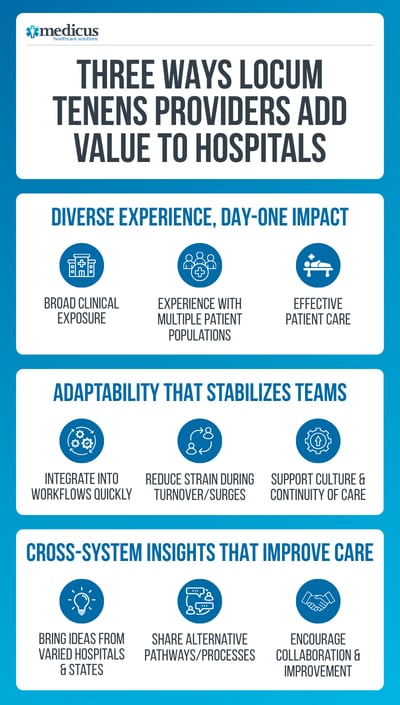
#1: Bring Experience Built Across Diverse Care Settings
Locum tenens physicians and advanced practitioners often gain experience across many clinical environments, including large health systems, community hospitals, and rural facilities. Working in different care settings and with a wide range of patient populations helps them build strong clinical judgment and understand how care needs can vary from one community to another. This experience gives locum tenens clinicians a well-rounded perspective that they carry into each locum tenens job, which supports effective patient care from the moment they arrive.
#2: Provide Adaptable Support to Strengthen Culture & Care Delivery
Locum tenens practice naturally builds adaptability. Locum tenens physicians and advanced practitioners are used to joining new teams, learning the rhythm of each unit, and contributing in ways that support established workflows. Their ability to understand the environment quickly and collaborate with confidence becomes a steady presence during periods of staffing change.
When permanent teams are stretched or turnover adds pressure, a locum tenens clinician who is accustomed to stepping into new hospitals can help maintain stability. Their willingness to assist where needed often eases the load on full-time staff, supports a positive team culture, and helps keep patient care moving without interruption. Locum tenens adaptability is especially valuable during seasonal surges, service expansions, or times when clinical staffing is shifting.
#3. Add Cross-System Insights to Improve Care Approaches & Collaboration
Locum tenens physicians and advanced practitioners may bring a broader view of how hospitals operate because they often work across different states, facility sizes, and patient populations. This experience can give them visibility into how organizations approach similar clinical situations and which resources or care pathways might be effective in different settings.
They can introduce ideas that expand a team’s awareness of available options. Whether sharing technologies a smaller facility may not have encountered or describing alternative ways to manage specific patient scenarios, locum tenens clinicians can help teams compare approaches and support ongoing collaboration and improvement across the departments they join.
Locum Tenens as a Strategic Part of Workforce Planning
The strengths that locum tenens clinicians bring at the individual level become even more valuable when they are integrated into broader staffing strategies. As physician shortages continue to grow while demand rises, hospitals are using locum tenens proactively rather than reactively to strengthen workforce stability and maintain access to care. Strategic staffing efforts include:
- Transition Staffing Models: Locum tenens clinicians can provide the support and continuity needed when hospitals shift from outsourced to employed staffing models or move between outsourced partners. With locum tenens support, leaders are able to implement changes in a timely manner without interruption to patient care.
- Open or Expand Service Lines: Bringing in locum tenens physicians or advanced practitioners who specialize in a new or developing service allows hospitals to assess demand, refine workflows, and determine whether permanent staffing is sustainable. This flexibility helps leaders evaluate growth opportunities without prematurely committing long-term resources.
- Reduce Workload and Burnout: When unexpected provider turnover occurs or leave happens, locum tenens support can help prevent rising workloads that often lead to provider burnout and operational strain.
- Implement Scheduling Flexibility: Incorporating locum tenens into staffing strategies allows permanent staff to take vacation or personal leave without limiting access to care or increasing pressures on remaining team members.
- Incorporate Care Team Models: As hospitals refine care team structures or adjust responsibilities, locum tenens clinicians can supplement staffing and help maintain workflow consistency. Their exposure to various care models across organizations provides added support during transitions.
The Benefits of Partnering with a Locum Tenens Agency
Hospitals that take a strategic approach to locum tenens can benefit from both the individual strengths clinicians bring and the flexibility they offer at the organizational level. When incorporated into broader workforce planning, locum tenens support can help leaders manage transitions, explore service growth, maintain team stability, and protect access to care as demands shift.
Partnering with a reputable locum tenens agency, such as Medicus, helps hospitals put this strategy into practice. Medicus works closely with healthcare leaders to understand clinical staffing challenges, long-term goals, and the clinical and cultural expectations of both the department and the broader organization. This alignment ensures locum support strengthens the team and contributes to broader workforce objectives.
For hospitals navigating long-term staffing initiatives, Medicus offers a project-based interim staffing solution, known as the Medicus Transition Program. Designed for specialties with multiple FTE gaps in coverage, the Medicus Transition Program provides the stability and reliability needed to support clinical workforce stabilization.
One health system leader described their experience partnering with Medicus by sharing,
“What stood out most about partnering with Medicus was the caliber of providers and the consistency of communication. Each locum tenens provided by Medicus exceeded our expectations and aligned with both the clinical and cultural requirements of our hospital.”
With the right partner, locum tenens becomes more than a staffing solution. It becomes a strategic advantage that enhances team stability, strengthens patient care, and supports a more resilient workforce.
Interested in partnering with Medicus for locum tenens staffing? Complete the short form below to connect with a member of the Medicus team.


.png)