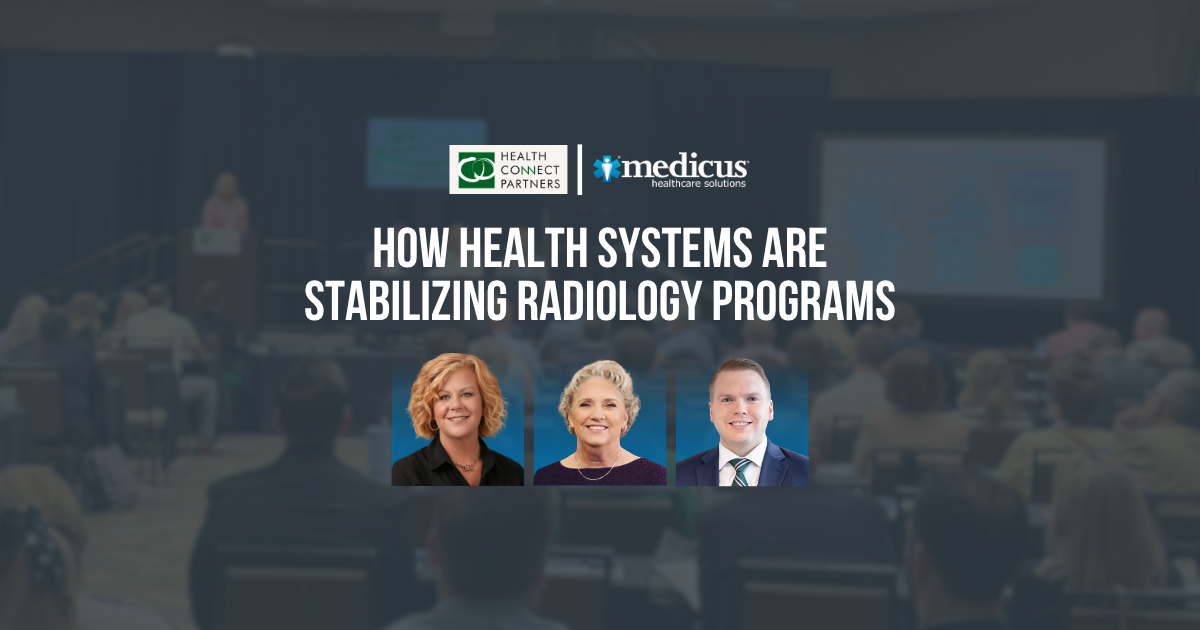
Radiology leaders are facing growing pressure from rising imaging volumes, workforce shortages, and increasing expectations around access and turnaround times. During the session, Imaging Under Pressure: How Health Systems Are Stabilizing Radiology, at the Health Connect Partners (HCP) Spring Radiology & Imaging Conference, Medicus Healthcare Solutions brought together health system leaders to share how their organizations are strengthening workforce stability and redesigning radiology operations for long-term sustainability.
Moderated by Shannon Peterson, Senior Vice President and Head of Delivery at Medicus Healthcare Solutions, the panel featured leaders from Centralus Health, Covenant HealthCare, and Lakeland Regional Health, who discussed how they are moving beyond reactive staffing models through more strategic approaches to workforce planning, remote coverage, onboarding, and operational alignment.
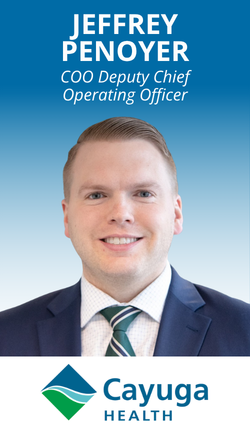
Panelists included:
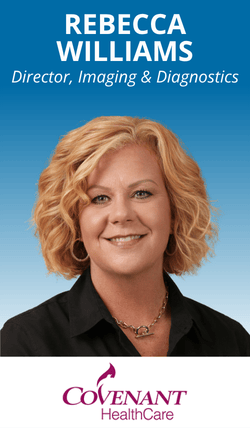
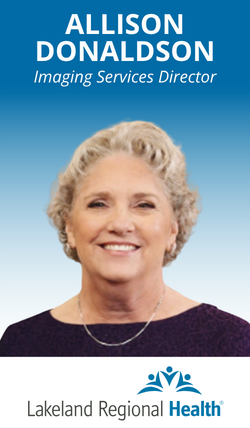
Radiology Workforce Stability Starts with Redesigning the Model, Not Just Backfilling Coverage
When radiology coverage becomes unstable, the immediate focus is often on filling shifts, clearing backlogs, and preventing turnaround times from falling behind. But as the panelists shared, restoring coverage alone does not solve the larger issue. The greater challenge is building a radiology model that can remain stable as imaging demand rises, physician shortages intensify, and operational expectations continue to evolve.
Across each organization, leaders reached the same conclusion: the traditional model was no longer sustainable. Rising volumes, recruitment challenges, outsourced radiology partnerships that could not keep pace, and abrupt provider departures all exposed operational structures that were not built for long-term stability.
Rather than simply replacing physicians, organizations redesigned how radiology operated. Several transitioned to employed radiology models to improve alignment and accountability. Others expanded remote coverage, introduced more flexible scheduling structures, integrated APPs and workflow support teams, and strengthened onboarding, quality assurance, and workforce planning processes.
The result was a fundamental change in how radiology was positioned within the health system. Rather than operating as a standalone coverage function, radiology became more closely aligned with enterprise goals around access, growth, physician experience, and patient care. As Jeff Penoyer of Centralus Health explained after transitioning to an employed model, “Our goals are their goals.”
Flexibility Is Evolving From a Perk to a Workforce Strategy
Flexibility emerged as one of the strongest themes throughout the discussion, not simply as a recruitment benefit, but as a critical component of long-term workforce stability. Hybrid schedules, remote reading models, and alternative employment structures are increasingly expected in today’s radiology market. But panelists emphasized that flexibility alone is not enough. Without clear expectations and operational structure, it can quickly create inconsistency across coverage, communication, and accountability.
“I think flexibility is a huge necessity in our world today to be able to retain radiologists, but having the expectations around it is what provides the stability to the group,” Williams said.
At Centralus Health and Cayuga Health, that mindset evolved into a more deliberate workforce strategy. Rather than relying on a traditional one-size-fits-all employment model, leadership developed a structured compensation and staffing framework to support diverse workforce preferences while meeting operational demands. As Penoyer described, the organization created a “menu of options” that accounts for variations in remote versus on-site work, holiday and weekend coverage, and employment structures ranging from full-time to per diem and independent contractor arrangements.
The goal was not simply to offer more flexibility. It was to create a scalable, consistent framework that enables the organization to compete nationally for radiology talent while maintaining operational stability. As Penoyer noted, health systems are no longer competing only within their local markets. “We’re competing across the country to get that talent.”
Remote Radiology Expands Capacity, But Integration Determines Long-Term Success
Remote reading has become a foundational component of modern radiology operations, but the panel underscored that its success depends less on technology and more on how well remote clinicians are integrated into the care team.
At Centralus Health and Cayuga Health, remote coverage became one of the most significant changes following the transition to an employed radiology model. After years of resistance to remote reading within the previous group structure, nearly half of the radiology team now works remotely. According to Penoyer, the shift required leadership to rethink not only scheduling and coverage, but also how remote radiologists participate as members of the care team.
“That's been a culture shift to figure out how we integrate remote radiologists into our group, as well as into our system, to make them feel like they're a part of the medical community, and that they're not just pushing out reports, but rather they're really essential to that clinical team,” Penoyer said.
Williams reinforced this from an operational standpoint. At Covenant HealthCare, several radiologists work remotely from out of state, and many cover overnight shifts, making relationship-building a deliberate and ongoing priority. That includes regular check-ins, clear communication of expectations, and closing the loop so radiologists feel heard and connected to the broader team.
At Lakeland Regional Health, Donaldson shared how maintaining connection with an almost entirely remote radiology team requires simple but intentional communication practices. Her team begins each day with direct outreach to surface operational concerns early and create an accessible line of communication between radiologists and leadership.
"At least it's a communication they feel comfortable using… it starts that chain of communication," Donaldson said.
Her comments reflected an operational shift discussed throughout the panel: maintaining workforce stability in a remote environment requires more intentional leadership visibility, faster issue resolution, and consistent engagement across distributed teams.
Together, the discussion highlighted a shift taking place across radiology leadership. Remote coverage is no longer simply a staffing solution for expanding access to talent. It requires leadership models built around communication, responsiveness, integration, and culture to ensure distributed teams remain aligned with clinical operations and organizational goals.
Radiology Workforce Stability Depends on the Entire Care Team
While turnaround time remains one of the most closely watched performance metrics in radiology, panelists emphasized that sustainable improvements in throughput cannot rely on radiologists alone. Long-term performance depends on how effectively the entire imaging operation is structured to support them.
Across the discussion, leaders described how APPs, technologists, workflow support teams, and operational infrastructure have become essential to maintaining efficiency, reducing friction, and allowing radiologists to focus on higher-value clinical work. As imaging volumes continue to rise and workforce shortages persist, organizations are increasingly redesigning workflows to better distribute responsibilities across the care team.
Williams described APPs as the “boots on the ground,” managing patient-facing communication, consults, education, and rounding so radiologists can remain focused on reading studies and performing complex procedures. The organization also implemented workflow safeguards and ticketing systems that identify missing information, mismatched studies, or imaging issues before cases reach the radiologist's work queue, reducing interruptions and improving throughput.
Donaldson described a similar approach within Lakeland Regional Health’s interventional radiology department, one of the busiest in Florida. RAs and PAs play a critical role in supporting patient preparation, consent, procedural coordination, and day-to-day workflow management, helping the department maintain throughput in a high-volume environment.
When care teams are structured intentionally, radiologists can focus on the highest-value clinical work, and departments can sustain performance without relying on individual output alone.
Long-Term Workforce Stability Depends on More Than Recruitment
In today’s competitive radiology market, recruitment alone is no longer enough to sustain workforce stability. Health systems are competing nationally for talent, and the organizations gaining traction are investing just as heavily in onboarding, engagement, leadership, and retention as they are in hiring itself.
Panelists described onboarding as a critical operational strategy rather than an administrative process. At Covenant HealthCare, new radiologists receive one-on-one PACS training, clear workflow expectations, and a phased “soft start” that allows them to integrate alongside peers before stepping into independent coverage.
As Williams put it, "They didn't have to be day one on third shift by themselves."
Several leaders also emphasized that workforce sustainability now depends on building clearer long-term pathways for growth and engagement. At Cayuga, leadership is developing a clinical ladder for technologists that recognizes cross-modality expertise and continued training. At Lakeland, leadership development has become a priority as organizations adapt to the expectations of a younger workforce entering the field.
When asked about the most important investment for imaging leaders over the next three to five years, Penoyer pointed to the intersection of technology and people.
"At the heart of the matter, it's really going to come down to investing in people and investing in your culture… that tenet is not going to go away," Penoyer said.
Interim Staffing Creates the Capacity for Long-Term Change
For many health systems, making system-level changes is difficult while day-to-day coverage pressures continue. The panelists’ experiences showed that interim staffing can create the operational runway leaders need to stabilize access while building longer-term solutions.
Across all three organizations, partnering withMedicus Healthcare Solutions as a trusted locum tenens staffing partner gave leaders the operational support needed to implement these changes while maintaining continuity across radiology services.
Whether it was stabilizing a critical backlog while standing up a new in-house program, rapidly onboarding a large number of radiologists during unusually high imaging volume, or supplementing an employed model while subspecialty recruitment continues, interim support allowed leaders to act strategically rather than reactively.
The discussion reinforced that interim staffing is most effective when built into a long-term workforce approach rather than treated as a last-minute solution. For many organizations, having a trusted locum tenens agency partner in place created the confidence and operational support needed to navigate periods of significant pressure, maintain continuity, and move forward with larger strategic changes.
"Making sure that you have a strategy and a partner around, that is really important," Penoyer said.
Building a Resilient Radiology Program Requires Intentional, System-Level Choices
Across organizations of different sizes, geographies, and patient populations, a stable radiology program emerged as the result of deliberate choices about how care is designed, staffed, and sustained. The discussion consistently pointed to a core set of strategies: redesigning operating models, building structured flexibility, strengthening the care team, investing in people, and partnering strategically to maintain continuity.
Interested in learning how Medicus can help stabilize your radiology program? Complete the short form below to connect with a member of the Medicus team.