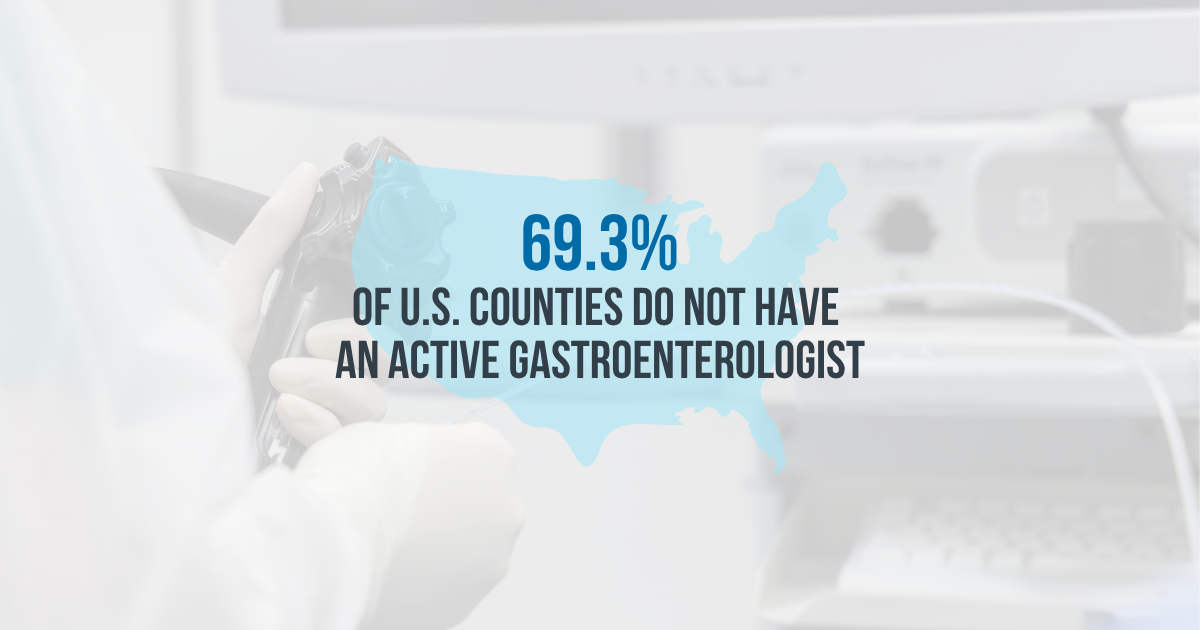
The growing imbalance between GI demand and physician supply is reshaping how healthcare organizations approach workforce planning and care delivery. This report explores the key factors driving the gastroenterologist shortage, emerging workforce trends, and strategic solutions leaders are implementing to stabilize coverage and protect patient access.
Get a Data-Driven Look at the Gastroenterology Shortage Report Here
Get a Data-Driven Look at the Gastroenterology Shortage Report Here
The Gastroenterologist Shortage: A Widening Supply-Demand Gap
The United States is projected to face a shortage of 510 full-time equivalent (FTE) gastroenterologists in 2026, according to the National Center for Health Workforce Analysis. As demand for GI care continues to rise, the gap between supply and demand is expected to widen in the years ahead.
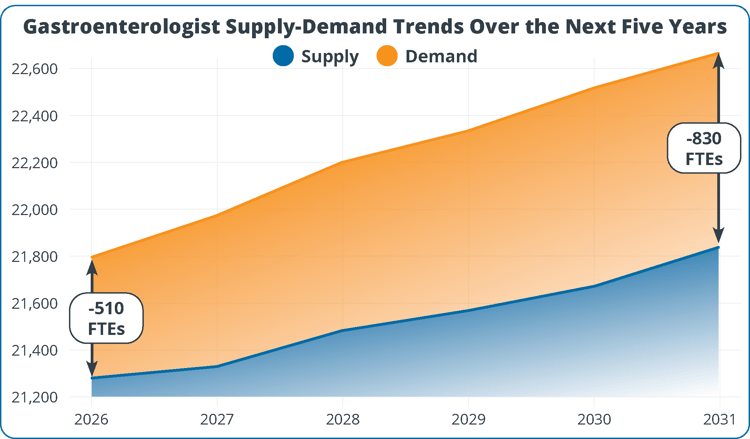
As the shortage continues to increase, even gradual gains in gastroenterologist supply may leave hospitals, health systems, and medical groups with too few specialists to meet rising demand. Over time, that imbalance can make it harder to maintain timely screenings, manage inpatient consults, support procedure volume, and provide ongoing GI care without placing additional strain on existing teams.
Gastroenterology By the Numbers: Workforce & Job Growth Projections
There are over 19,400 gastroenterologists in the United States, with approximately 1,700 specializing in pediatric gastroenterology. 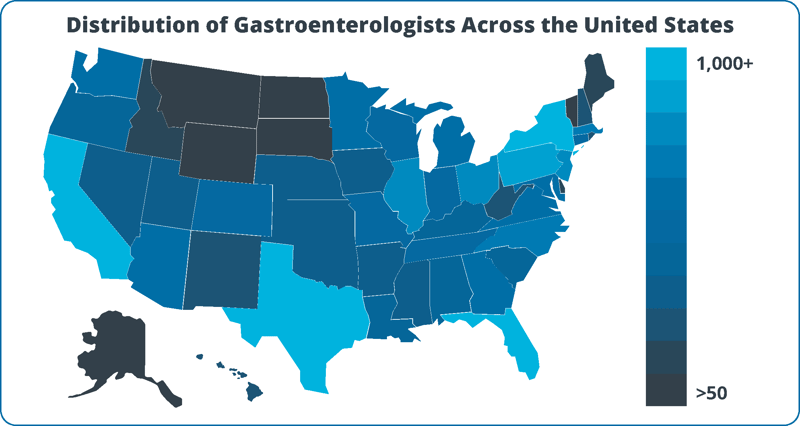
Broader workforce projections further suggest that demand for physician services will continue to grow in the years ahead, with employment of physicians and surgeons projected to grow 3% from 2024 to 2034, according to the U.S. Bureau of Labor Statistics.
Locum Tenens Gastroenterology: A Look at the Interim Workforce
According to the National Association of Locum Tenens Organizations (NALTO), approximately 52,000 physicians work locum tenens each year. Among gastroenterologists, an estimated 19%* of the workforce has worked locum tenens either alongside their permanent position or as a standalone career.


*Estimates represent a forecast based on Medicus’ proprietary data as of May 2026.
Gastroenterology Hiring Trends: Challenges in Recruitment
Gastroenterology remains one of the most in-demand specialties, yet the available workforce is falling short of operational needs. Many healthcare organizations continue to face difficulties securing gastroenterologists.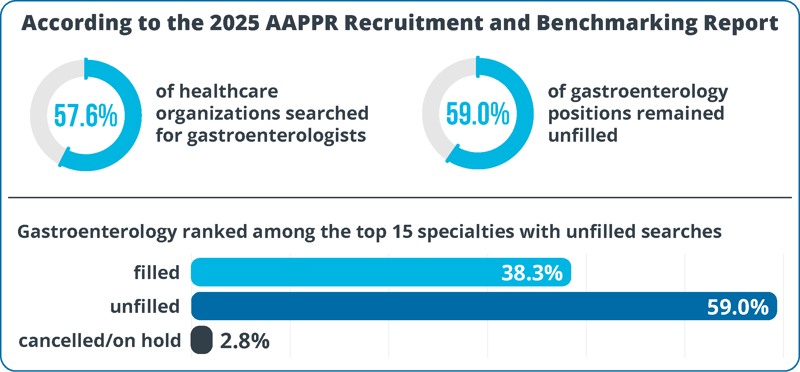
With a median of 186 days to fill an open gastroenterology position, vacancies can have significant financial implications. Gastroenterologists are one of five physician specialties that generate 7X their salary in average net annual hospital revenue - an average of roughly $3.5 million per physician annually - making timely recruitment critical to both patient access and system performance.
Key Drivers: Factors Behind the Growing Gastroenterologist Shortage
Demographic Shifts: Increasing Demands for GI Services
An aging population, combined with rising gastrointestinal conditions among younger adults, is expanding the need for screenings, diagnostics, and long-term care.
An Aging Population
An aging population is expected to continue increasing the demand for GI care in the years ahead. By 2030, 1 in 5 Americans will be age 65 or older, and older adults are more likely to require frequent screenings, procedures, and ongoing management of chronic gastrointestinal conditions. 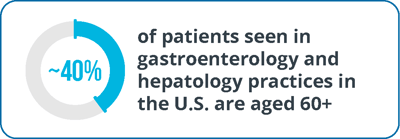
As more patients age into higher-utilization years, healthcare organizations may see greater pressure on GI appointment availability, procedure capacity, and ongoing care management.
The Younger Population
Younger adults are increasingly affected by gastrointestinal conditions that were once more prevalent among older populations. This trend is expanding the need for earlier diagnostic evaluations and long-term monitoring. 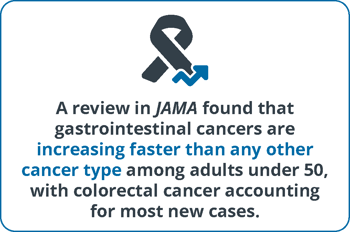
Limited Number of GI Fellowship Positions: Delaying Workforce Entry
Gastroenterology is one of the most sought-after and competitive fellowships. However, limited training capacity continues to restrict entry into the field, slowing the rate at which the workforce can grow. 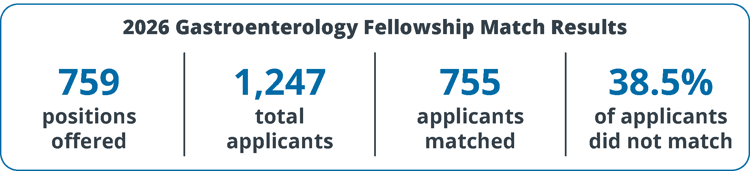
Of the 1,241 applicants who ranked gastroenterology as their preferred specialty, only 9 matched into a different subspecialty, leaving a substantial number of qualified applicants without a fellowship position in any specialty. The result is a narrower pipeline of future gastroenterologists at a time when many organizations are already facing sustained difficulty meeting demand for GI care.
Actionable Strategies: Overcoming the Gastroenterologist Shortage
Develop GI Hospitalist Models: Strengthening Inpatient Coverage
A GI hospitalist model offers a more structured approach to managing inpatient gastroenterology demand. Rather than dividing time across inpatient and outpatient settings, designated gastroenterologists focus exclusively on hospitalized patients, creating a more consistent inpatient presence. 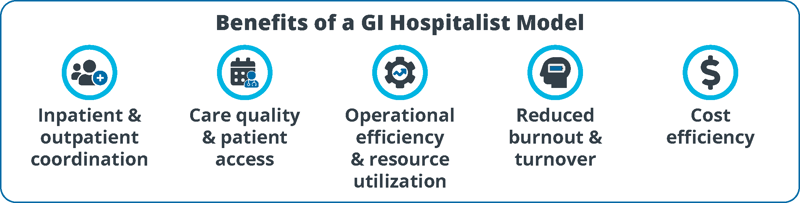
By dedicating specialists to inpatient services, hospitals can improve patient flow, strengthen care coordination, and allow outpatient gastroenterologists to focus on procedural and clinic-based work.
Leverage Artificial Intelligence (AI): Enhancing Diagnostic Efficiency
AI is creating new opportunities to improve efficiency in gastroenterology, particularly in diagnostic workflows and endoscopic image analysis. When implemented intentionally, AI can help support faster clinical evaluation, reduce administrative burden, and improve the use of departmental resources. 
With AI supporting tasks such as image review and workflow optimization, gastroenterology departments may be better positioned to improve throughput and allocate physician time more effectively.
Incorporate Gastroenterology Locum Tenens: Stabilizing GI Coverage
Locum tenens gastroenterologists can help bridge immediate gaps in coverage and serve as a strategic workforce resource in gastroenterology. Beyond filling vacancies, leaders can leverage locum tenens gastroenterologists to stabilize operations, support evolving care models, and maintain access to care as more permanent staffing strategies take place.
For a comprehensive look at the factors driving the gastroenterologist shortage and strategies to ensure continuous access to GI care, we invite you to download our complete report by filling out the form above.
Frequently Asked Questions about the Gastroenterologist Shortage
How Many Gastroenterologists Are in the United States?
According to Medicus' proprietary data, as of May 2026, there are over 19,400 gastroenterologists, with approximately 1,700 of them specializing in pediatric gastroenterology.
How Many Gastroenterologists Work Locum Tenens?
Roughly 1 in 5 gastroenterologists have worked locum tenens either alongside their permanent role or as a standalone career, according to estimates from Medicus' proprietary data as of May 2026.
What is Contributing to the Shortage of Gastroenterologists?
Several factors are contributing to the gastroenterologist shortage, including demographic shifts, geographical disparities, limited fellowship positions, and more.
Are Gastroenterologists in High Demand?
Yes, gastroenterologists are in high demand as patient needs continue to rise and the workforce remains limited. Each gastroenterologist generates about $3.5 million in average net annual hospital revenue, highlighting their essential role in patient access and hospital performance.
What States Have the Lowest Number of Gastroenterologists Per Capita?
The states with the lowest number of gastroenterologists per capita include Nevada, Montana, Oklahoma, North Dakota, and Wyoming, with roughly 3 gastroenterologists per 100,000 people.
%20(2)%20(1).png)