Rising demand for breast cancer screening and diagnostics is outpacing the supply of breast imaging radiologists, straining workforce capacity and access nationwide. 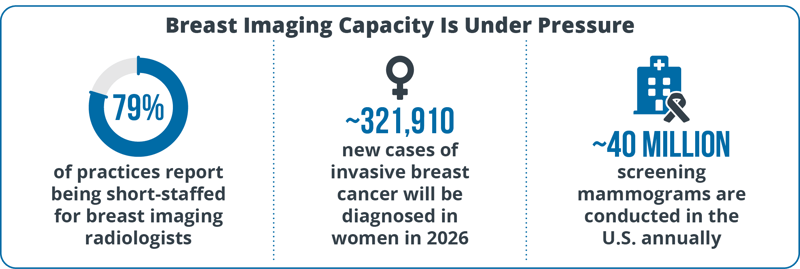
With just about four breast imaging radiologists per 100,000 U.S. women ages 40 and older, access constraints are already in place and expected to intensify.
View The Data Behind The Breast Imaging Radiologist Shortage
View The Data Behind The Breast Imaging Radiologist Shortage
By the Numbers: Workforce & Job Growth Projections
There are approximately 7,500 breast imaging radiologists in the United States, with distribution varying across the United States. 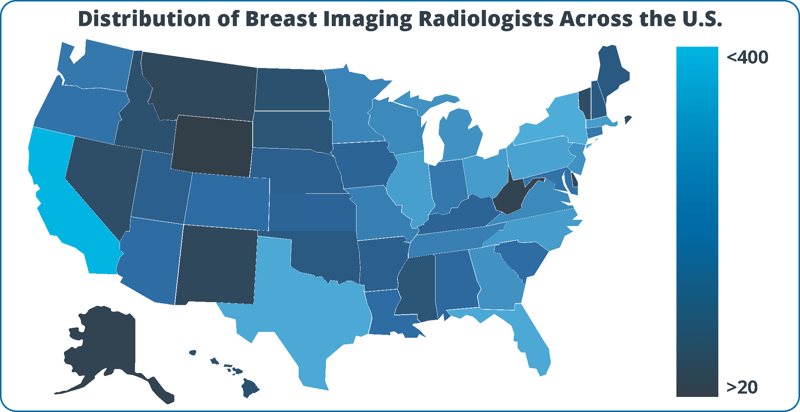
Geographic disparities between the supply of breast imaging radiologists and the population of women who rely on their services underscore a widening gap between workforce capacity and demand across the U.S.
Key Drivers: Contributing Factors to the Breast Imaging Radiologist Supply-Demand Imbalance
Breast Cancer Prevalence: Expanding Imaging Demand
.png?width=800&height=322&name=Projected%20New%20Breast%20Cancer%20Diagnoses%20(2024%E2%80%932026).png)
Changes in Screening Guidelines: Added Demand on Imaging Teams
In 2024, the U.S. Preventive Services Task Force (USPSTF) updated its breast cancer screening recommendation, lowering the starting age for biennial mammography from 50 to 40 and recommending screening every two years for women ages 40-74. Federal MQSA updates also took effect, requiring notification of breast density in mammography results. 
Together, these changes can increase both mammography utilization and patient questions, placing added demand on imaging teams and turnaround times.
Burnout: Straining Workforce Capacity & Staffing Stability
With fewer breast imaging radiologists available, many teams are absorbing heavier screening and diagnostic volumes, making schedules harder to sustain and day-to-day coverage less predictable. 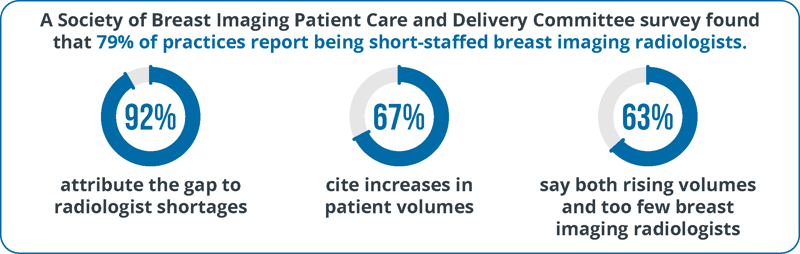
Actionable Strategies: Sustaining Access to Breast Imaging Care
Utilize Teleradiology: Expanding Access to Breast Imaging Care
Remote breast imaging coverage through teleradiology helps facilities manage turnaround times, reduce backlogs, and prevent delays in care when local staffing is constrained. 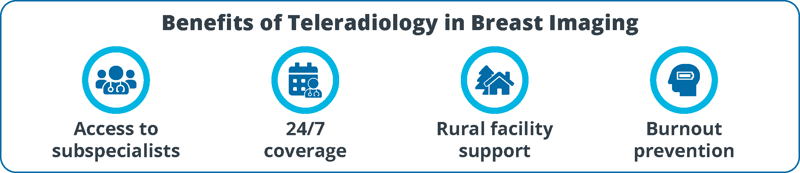
On-site breast imaging radiologists remain crucial to care delivery; however, leveraging remote readers or even offering hybrid work can help offset patient volumes, improve turnaround times, and ensure accurate breast imaging interpretations.
Implement Artificial Intelligence: Enhancing Breast Imaging Capacity
AI is reshaping breast imaging by augmenting radiologists' capabilities and helping teams manage rising volumes with limited staffing. In real-world screening settings, early evidence suggests AI can reduce routine workload while preserving, and in some cases, improving screening performance. 
Leverage Locum Tenens: Bridging Gaps in Breast Imaging Coverage
Utilizing breast imaging locum tenens radiologists can be an essential strategy for maintaining uninterrupted breast imaging services and ensuring timely reads and diagnoses. 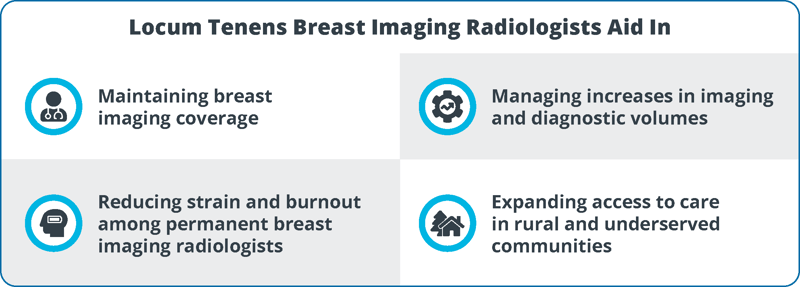
Partnering with a trusted locum tenens agency like Medicus for breast imaging locum tenens radiologists ensures healthcare organizations can respond quickly to coverage gaps without compromising quality or continuity of care.
For an in-depth overview of the factors driving the shortage of breast imaging radiologists and actionable strategies leaders can use to maintain access to care, download the complete report here.
Frequently Asked Questions About the Breast Imaging Radiologist Shortage
How Many Breast Imaging Radiologists Are in the United States?
There are approximately 7,500 breast imaging radiologists in the United States.
What States Have the Lowest Number of Breast Imaging Radiologists Per Capita?
West Virginia, New Mexico, Nevada, Wyoming, and Arizona are among the states with the fewest breast imaging radiologists per 100,000 women ages 40 and older, based on estimates as of January 2026.
Why Is There a Shortage of Breast Imaging Radiologists?
The shortage of breast imaging radiologists results from a combination of factors, including screening guidelines, limited interest in fellowships, increasing breast cancer diagnosis, and others.
How Many Practices Report Breast Imaging Radiologist Shortages?
A Society of Breast Imaging Patient Care and Delivery Committee survey found that 79% of practices report being short-staffed in breast imaging radiology.