The urology workforce is under increasing strain, with existing physician shortages already limiting access to care across the United States. As workforce pressures continue to build, healthcare leaders are taking a closer look at the factors driving the urologist shortage and the strategies available to protect access to urologic care now and in the years ahead.
Access the Data Behind the Urologist Shortage

Access the Data Behind the Urologist Shortage
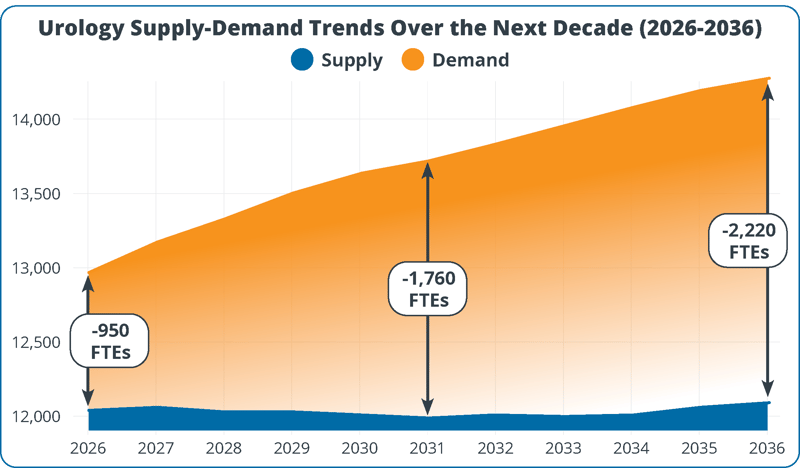
By the Numbers: Urology Supply-Demand Trends Over the Next Decade
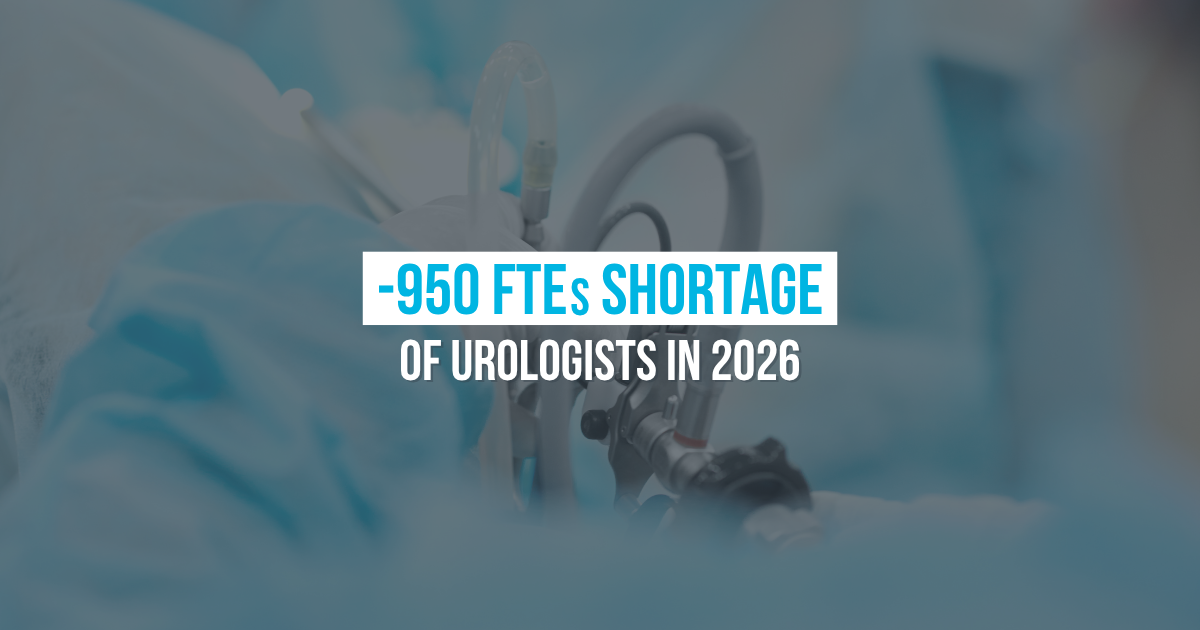
The United States has more than 12,200 active urologists, yet 62% of U.S. counties currently lack access, and demand already exceeds available supply. A projected shortage of 950 urology physicians in 2026 signals a widening gap that will continue to pressure access to urologic care.
Factors Behind the Urologist Shortage
An Aging Population & Workforce: Rising Demand Meets Retirement Risk
The U.S. population is aging, and the demand for urologic care is growing alongside it. By 2030, 1 in 5 Americans will be 65 or older, a demographic that increasingly relies on urologic services for conditions such as kidney stones, kidney disease, and prostate cancer. As this population continues to grow, demand for urologic care is only expected to intensify.
That rising demand is compounding an equally pressing challenge: the urology workforce itself is aging. With more than half of practicing urologists aged 55 or older, a significant portion of the workforce is approaching retirement age.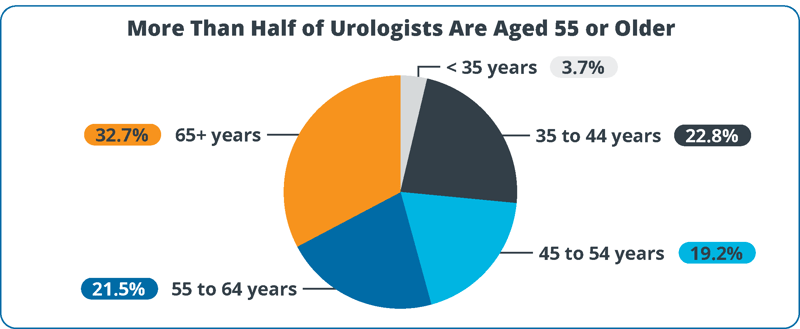
As retirements accelerate over the next decade, the supply of available urologists is expected to decline at the same time patient demand continues to climb, widening an already strained supply-demand gap.
Training Opportunities: Delaying Workforce Growth
Urology remains one of the most competitive residencies, with high applicant interest and limited training capacity. 
Despite a strong interest in urology, the number of residency positions available each year directly limits how many new urologists can enter the workforce. As demand rises and more practicing urology physicians approach retirement, the pipeline of incoming urologists may not be sufficient to meet the growing needs of the patient population.
Geographical Disparities: Limiting Access to Urologic Care
The urologist physician shortage is shaped not only by the number of practicing urologists but also by where those specialists are located. In rural and underserved communities, limited local access often pushes patients to regional or urban providers, increasing volumes and lengthening wait times in markets where urologists are available. 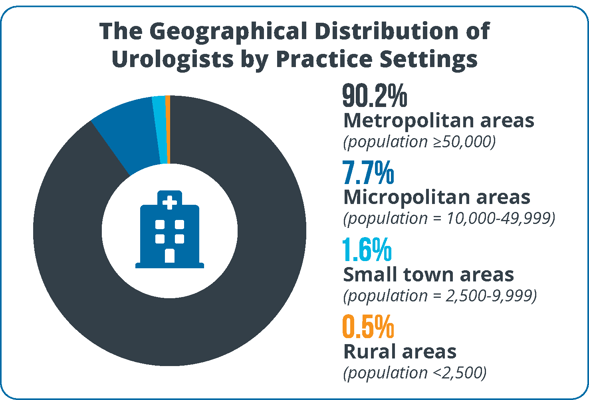
When fewer urologists are available locally, demand does not disappear. Instead, patient volume shifts to the nearest available providers, placing additional strain on already constrained practices and further limiting timely access to urologic care.
Actionable Strategies for Overcoming the Urologist Shortage
Implement Advanced Practice Providers (APPs): Enhancing Urologic Care
Limited residency capacity has slowed growth in urology, prompting many practices to integrate APPs as a strategy to maintain care delivery and support well-being. 
By integrating APPs into urology care teams, practices can delegate routine clinical responsibilities more effectively, giving urologists more time to focus on complex cases and higher-acuity patient needs.
Utilize Artificial Intelligence (AI): Reshaping Urologic Practice
Artificial intelligence (AI) is rapidly advancing in healthcare, and in urology, it holds significant potential across diagnosis, surgery, and recovery. From cancer detection to outcome prediction, AI is emerging as an invaluable tool for supporting patients and physicians.
As integration progresses with proper oversight, AI has the potential to augment urologists by enhancing care delivery, surgical precision, and the overall patient experience.
Strengthen Urologist Access: Leverage Locum Tenens Urologists
Locum tenens urologists offer more than a stopgap for clinical staffing shortages, serving as a strategic workforce resource for sustaining quality care. Leaders can leverage urology locums to stabilize operations, support evolving care models, and maintain patient access while longer-term staffing solutions take shape. 

Centralize Locum Tenens Management: Implement MedicusOne
Managing locum tenens staffing across multiple vendors, departments, and systems can create unnecessary complexity and limit visibility. MedicusOne brings staffing operations under one accountable model, helping organizations streamline coverage management, improve cost control, and support consistent access to quality providers.

The urologist shortage is expected to remain a persistent challenge, but healthcare organizations can take meaningful steps to protect access. A flexible, forward-looking workforce strategy can help sustain urologic care today while supporting a stronger, more resilient workforce for the future.
For an in-depth look at the latest data and industry trends on the urologist shortage, as well as additional strategies for maintaining access to care, download our complete report here.
Frequently Asked Questions About the Urologist Shortage
What is Causing the Urologist Shortage?
The urologist shortage is driven by several converging factors, including an aging patient population with growing demand for urologic services, a significant portion of the current urology workforce approaching retirement age, and limited residency capacity that constrains how many new urologists can enter the field each year. Geographic distribution further compounds the issue, with the majority of urologists concentrated in metropolitan areas.
How Severe is the Urologist Shortage?
The United States is projected to see a shortage of 950 urologist FTEs in 2026, with that gap expected to grow to more than 2,200 FTEs by 2036. Today, 62% of U.S. counties lack access to a urologist, with the shortage significantly impacting rural and underserved communities.
What Strategies Can Healthcare Organizations Use to Address Urologist Shortages?
Healthcare organizations are leveraging several approaches to maintain access to urologic care, including integrating advanced practice providers into urology care teams, utilizing locum tenens urologists to bridge coverage gaps, and exploring technology-enabled tools, such as AI, to support clinical workflows and decision-making.
How Can Locum Tenens Urologists Help My Healthcare Organization?
Locum tenens urologists provide flexible, short or long-term coverage that can stabilize a department during periods of unexpected turnover, increased patient volume, or while permanent recruitment is underway. Beyond filling immediate gaps, locums can serve as a longer-term strategic resource for maintaining consistent access to urologic care.
Where Can I Find More Data on the Urologist Shortage?
Medicus Healthcare Solutions has published a comprehensive report on the growing urologist shortage, covering workforce trends, geographic disparities, burnout data, and actionable strategies for healthcare leaders. Download the full report here.