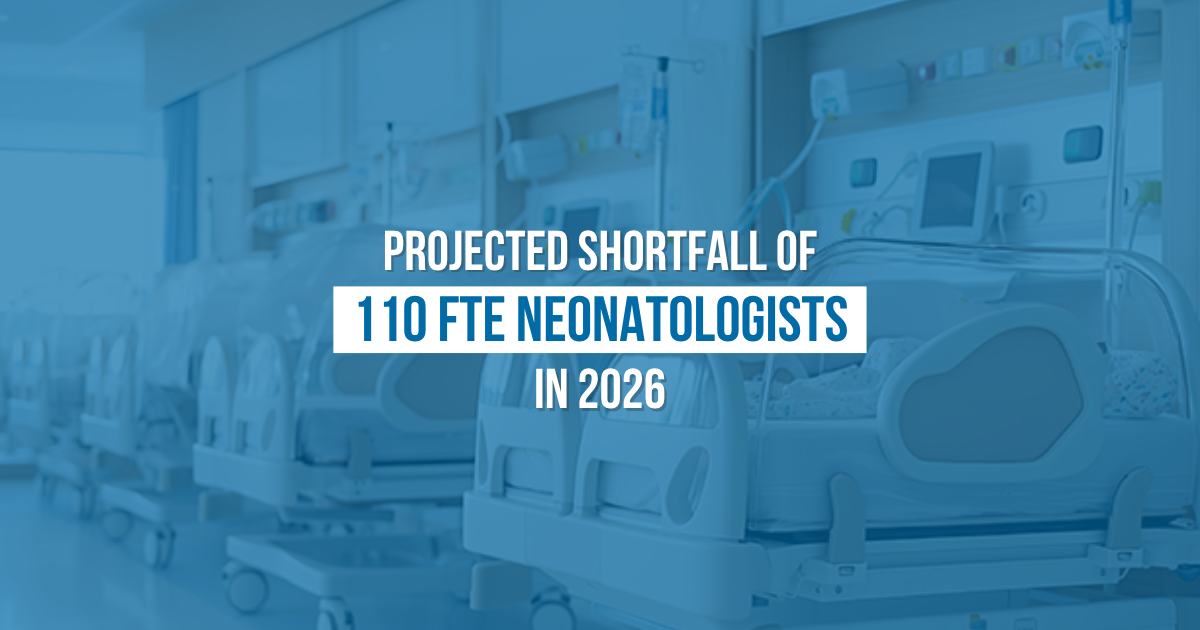
Neonatology coverage is often viewed through the lens of workforce supply, but the challenges facing hospitals and health systems are more complex than headcount alone. Specialist availability, NICU capacity, patient acuity, and regional transfer networks all influence whether newborns can access the right level of care when it is needed most. As workforce and capacity pressures vary across markets, healthcare leaders need a clearer view of where neonatal access is vulnerable and how staffing strategy can support care continuity.
Explore the Data Shaping Neonatology Coverage
Explore the Data Shaping Neonatology Coverage
Neonatologist Distribution: Revealing Regional Workforce Gaps
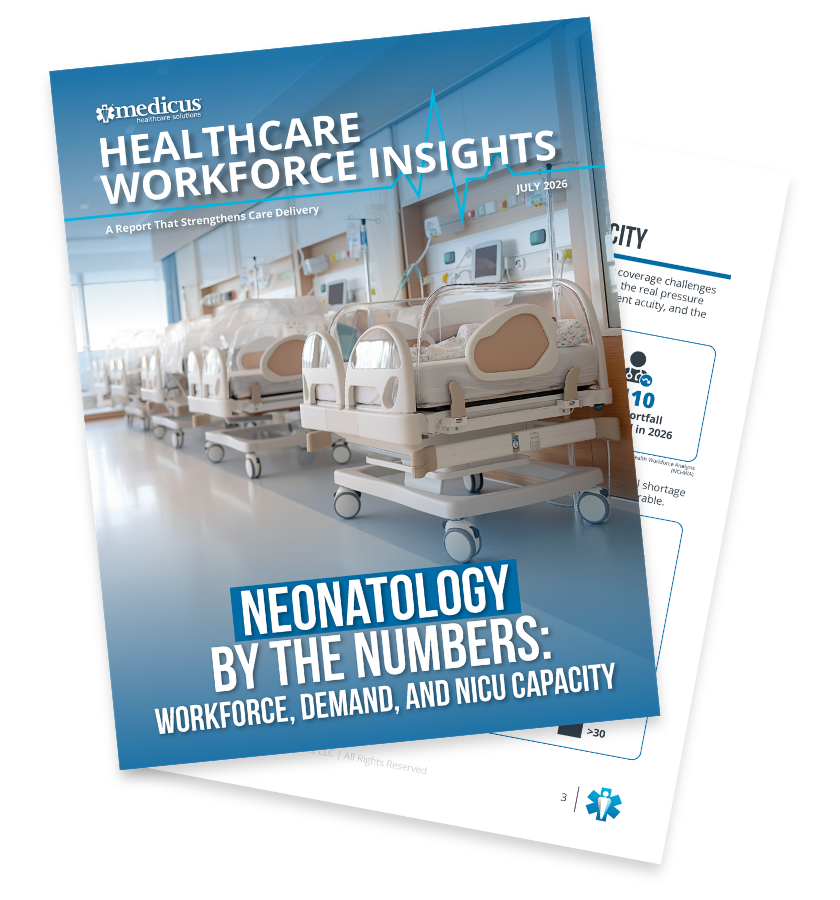
While the overall neonatologist shortage is modest, access varies significantly by location. Metro areas are expected to remain well covered, while non-metro communities continue to face workforce gaps.
Although the overall shortfall remains limited this year, the metro surplus is expected to continue over the next decade. Non-metro communities, however, are projected to face a sustained shortage, with the gap reaching 870 FTEs by 2031. 
With limited local access, non-metro families may face longer travel times or rely on transfers to metro facilities for neonatal care. Over time, that displaced demand could place additional strain on metropolitan programs, even in markets where workforce coverage appears strong.
NICU Capacity: Rising Demand and Uneven Access
NICU admissions have increased across the United States and are expected to remain a significant capacity consideration for hospitals and health systems providing neonatal care. 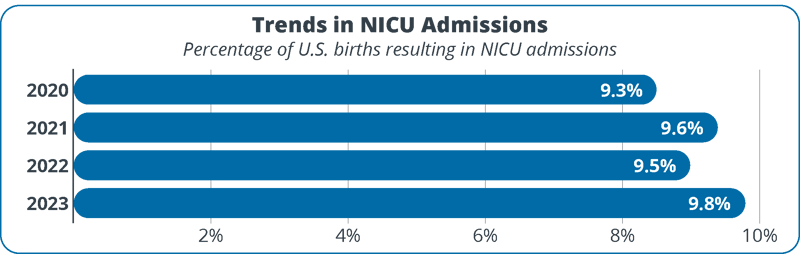
Although Level III and Level IV NICUs make up roughly 60% of all NICUs nationwide, many high-acuity units are concentrated in metropolitan areas. This uneven distribution can increase reliance on regional referral centers, particularly for non-metro communities with limited access to advanced neonatal care.
Key Challenges: Factors Shaping Neonatal Care Delivery
Maternity Care Deserts: Compounding Gaps in Maternal and Newborn Services
Neonatal care often begins before delivery. In maternity care deserts, patients may have to travel farther to access prenatal care, labor and delivery, and NICU care. 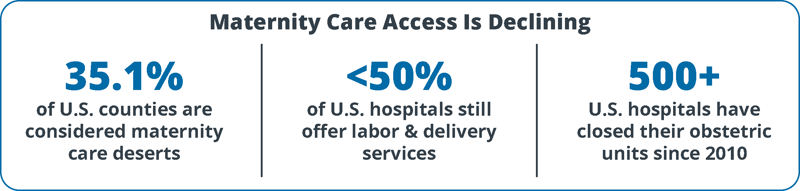
Distance becomes an even greater challenge when an infant requires higher-level neonatal care. While access to local care is limited in many non-metro communities, Level III and Level IV neonatal services are also far less available in rural birth hospitals 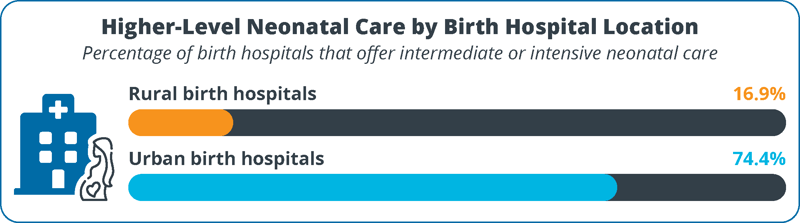
Fellowship Training: Waning Interest Slows the Neonatology Pipeline
Applicant interest in neonatal-perinatal medicine has trended downward in recent years, even as the number of available fellowship positions has increased, leaving a significant number of positions unfilled. 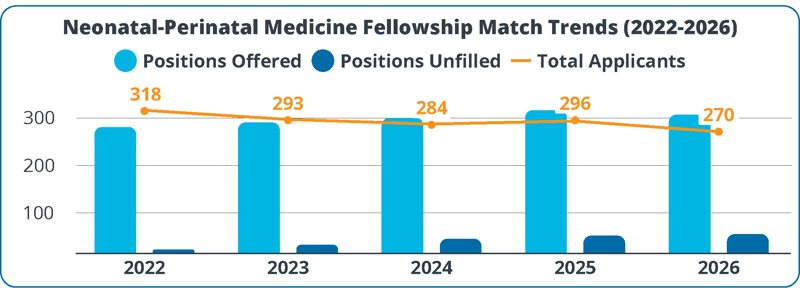
If applicant interest remains limited, the pipeline of new neonatologists may narrow, intensifying competition for talent, particularly in non-metro and underserved markets where recruitment is already more challenging.
Neonatal Nurse Practitioner Shortages: Straining NICU Staffing
NICUs rely on multidisciplinary teams of advanced practice providers, including neonatal nurse practitioners (NNPs). However, shortages among NNPs specifically are adding pressure to an already constrained workforce.
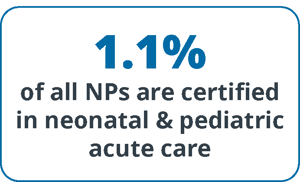
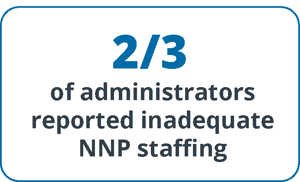

These shortages may make it harder for hospitals to maintain NICU coverage, manage patient volumes, and support existing neonatal care teams, particularly in non-metro areas.
Actionable Strategies: Strengthening Neonatology Coverage
Develop Regional Partnerships: Coordinating Care Across States
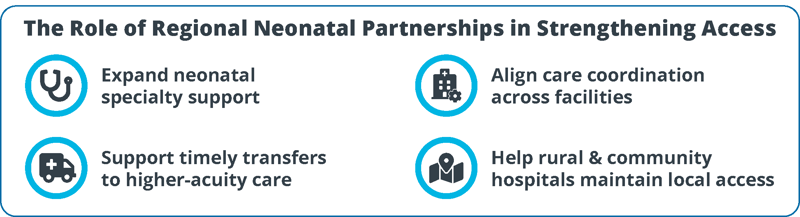 Regional partnerships can give community facilities a clearer pathway to consult with neonatologists, coordinate transfers, and connect newborns to higher-acuity resources when needed.
Leverage Telemedicine: Expanding Neonatology Expertise
With non-metro areas facing the most constrained neonatologist supply, telemedicine can extend specialist expertise to hospitals without consistent on-site neonatal coverage. By connecting local physicians with neonatal specialists in real time, virtual care can support clinical decision-making across the newborn care journey, from delivery and stabilization through monitoring, consultation, and transfer planning.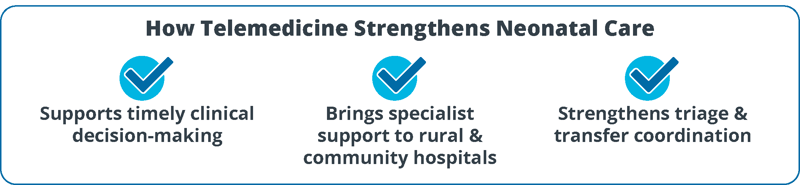
By bringing specialist guidance to the bedside, telemedicine can help Level I and community hospitals assess newborn acuity, initiate timely interventions, monitor infants virtually, and determine when transfer to a Level III or Level IV NICU is necessary. This added layer of support can improve access to neonatal expertise while helping hospitals deliver more appropriate care closer to home.
Secure Neonatal Access: Leverage Locum Tenens Neonatologists
Locum tenens neonatologists can help hospitals respond to immediate coverage needs while creating greater flexibility within their broader workforce strategy. In addition to filling vacancies, locum tenens coverage can support NICU stability, maintain access to care, and give leaders time to implement more sustainable staffing models.


Centralize Locum Tenens Management: Implement MedicusOne
Managing locum tenens staffing across multiple vendors, departments, and systems can create unnecessary complexity and limit visibility. MedicusOne brings staffing operations under one accountable model, helping organizations streamline coverage management, improve cost control, and support consistent access to quality providers.
For a comprehensive look at the neonatology workforce and where shortage areas are projected to be most pronounced, read the complete report here.
Frequently Asked Questions About the Neonatology Workforce
How Many Neonatologists Are There in the United States?
There are more than 5,400 neonatologists in the United States.
Is There a Shortage of Neonatologists in the United States?
Yes. Although the national shortage is relatively modest, the geographic imbalance is significant. Non-metro areas are projected to face a shortage of 860 FTEs in 2026, according to the National Center for Health Workforce Analysis.
What Factors Are Contributing to Neonatologist Workforce Challenges?
The pressure extends beyond neonatologist supply. Declining fellowship interest, neonatal nurse practitioner shortages, maternity care deserts, obstetric unit closures, and the uneven distribution of Level III and Level IV NICUs are collectively shaping neonatal care delivery.
When Should Healthcare Leaders Begin Planning for Neonatal Coverage Gaps?
Planning should begin before a vacancy or scheduling issue becomes critical. Reviewing workforce trends, anticipated leave, recruitment timelines, patient volumes, transfer activity, and permanent team workloads can help leaders identify coverage risks earlier and preserve more staffing options.
How Many Neonatologists Work Locum Tenens?
According to Medicus proprietary data, roughly 15% of the neonatology workforce works locum tenens full-time or in tandem with their permanent career as of July 2026.
How Can Locum Tenens Neonatologists Support NICU Coverage?
Locum tenens neonatologists can help hospitals maintain coverage during vacancies, leaves, recruitment periods, patient-volume increases, or staffing model changes. Locum tenens can also reduce pressure on permanent teams and provide experience aligned with a hospital’s NICU level and patient acuity.