Every surgical service line depends on a workforce that is getting harder to secure. The general surgeon shortage has moved from a recruitment challenge to a strategic constraint, shaping what healthcare organizations can offer, where they can offer it, and how long they can sustain it.
Access the General Surgeon Shortage Report
Access the General Surgeon Shortage Report
The General Surgeon Shortage: A Widening Supply-Demand Gap
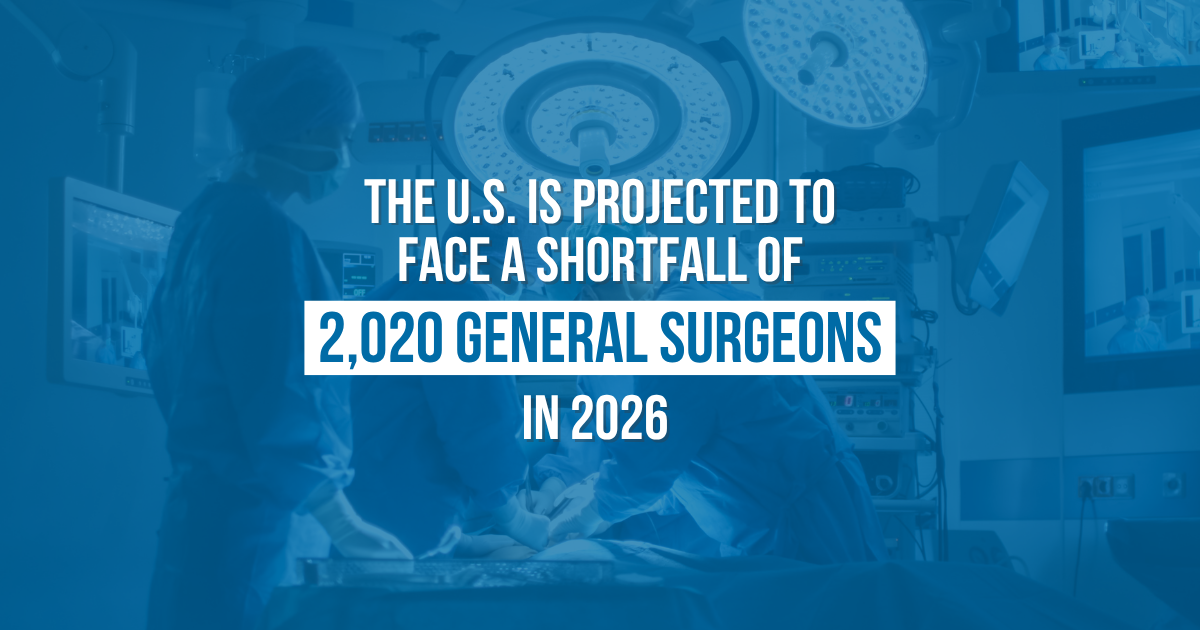
The United States is projected to face a shortfall of about 2,020 FTE general surgeons in 2026, a trend expected to remain a significant challenge for healthcare organizations through 2031. 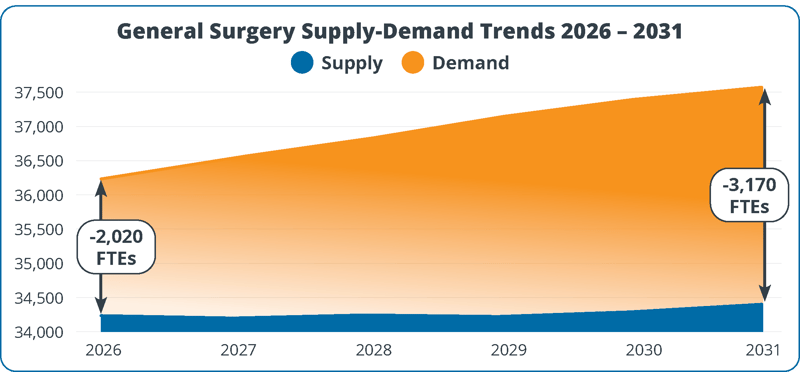
As surgical demand rises and workforce pressures persist, understanding the factors behind the general surgeon shortage and implementing strategies to address it will be critical for maintaining surgical access in the years ahead.
By the Numbers: A Look at the General Surgeon Workforce
There are more than 31,300 general surgeons in the United States, but regional distribution varies widely, revealing significant gaps in physician availability. 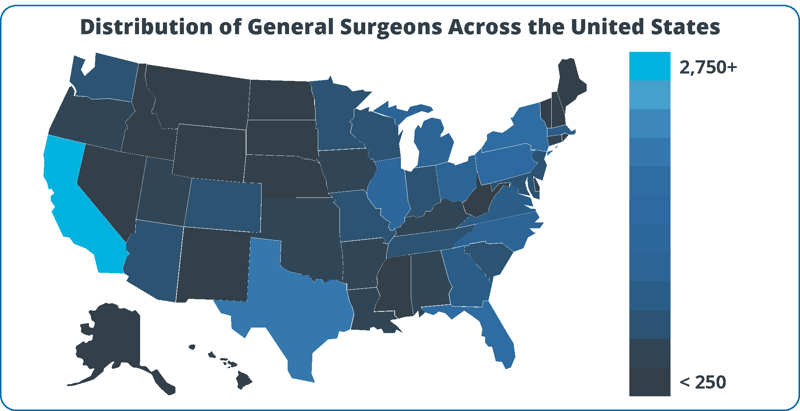
Nationally, there are approximately 9 general surgeons per 100,000 people in the United States, though that concentration varies considerably by state and jurisdiction.
Locum Tenens: A Snapshot of the Interim General Surgery Workforce
Within the general surgery workforce, more than 3,400 surgeons have worked locum tenens either alongside their permanent job or as a standalone career, according to Medicus' proprietary data. 
Key Drivers: Factors Behind the General Surgeon Supply-Demand Imbalance
Rising Surgical Demand & An Aging Population: Increasing the Need for Surgical Care
An aging population and a higher prevalence of chronic disease are driving more surgical volumes, placing greater demand on surgeons.
Surgical volumes are expected to increase between 2% and 3% annually over the next decade, driven in part by demographic shifts, including a 55% increase in the number of individuals aged 65 and older, according to a study published in the Journal of Medicine, Surgery, and Public Health.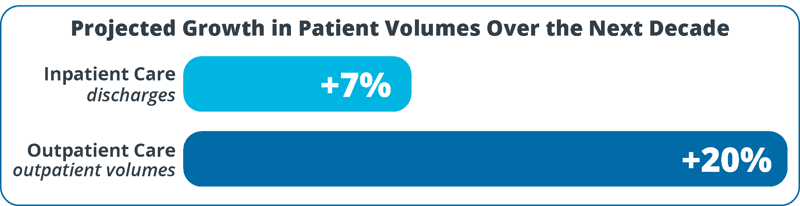
Much of the demand behind inpatient services is anticipated to be driven by higher-acuity surgeries and medical admissions. As the population ages and surgical demand continues to grow, pressure on an already strained surgeon workforce could intensify across inpatient and outpatient settings, potentially affecting timely access to care.
General Surgery Training Constraints: Limiting Workforce Growth
Interest in general surgery training remains strong, with 99.8% of residency positions filled in the 2026 Main Residency Match. Yet, training capacity remains limited, with applicant demand continuing to outpace the number of available positions.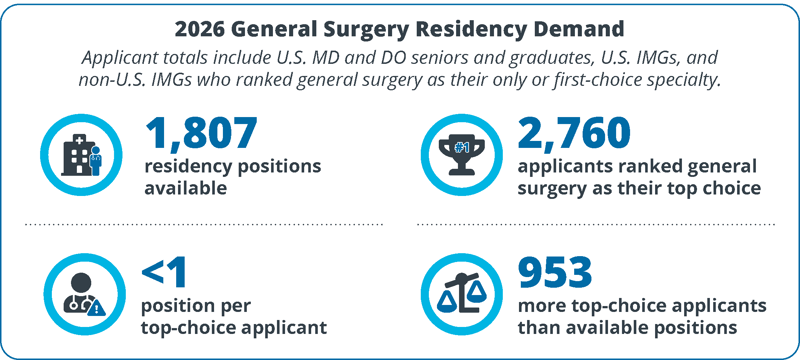
Despite an 11.4% increase in available positions since 2022, training capacity remains constrained. With surgical training taking a significant amount of time to complete, those limitations can have lasting effects on workforce growth.
Rural Disparities: Widening Gaps in General Surgeon Access
The shortage of general surgeons is not evenly distributed across the country. According to the Journal of Surgical Education, nearly one-third of rural U.S. counties lack a general surgeon, showing that access depends not only on the overall supply of surgeons, but also on where they choose to practice.
That imbalance is reflected in the significant shortfall of general surgeons across non-metro areas, a gap projected to persist in the years ahead.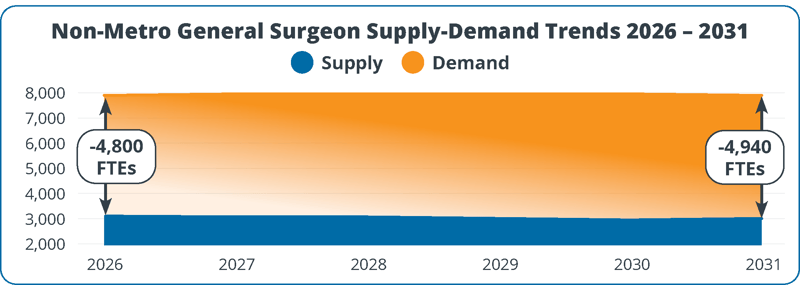
Operational & Financial Impacts: Recruitment Delays & Revenue Risk
Hiring Difficulties: Surgeon Shortages Continue to Challenge Recruitment
The effects of ongoing general surgeon shortages are also reflected in recruitment trends, with positions taking months to fill and a substantial share of searches remaining open.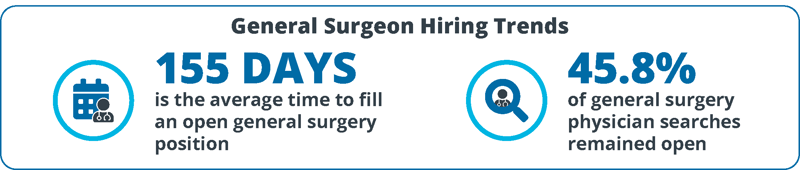

Financial Implications: The Cost of Limited Surgeon Coverage
Beyond staffing, surgeon shortages affect hospital financial stability, as surgeons contribute a significant share of hospital revenue. When surgeon availability is limited, hospitals may struggle to maintain services that support patient access and broader organizational performance.

For hospitals already operating with limited resources, gaps in surgical coverage can extend beyond the operating room, affecting service availability, revenue generation, and the ability to sustain other areas of care.
Actionable Strategies: Overcoming the General Surgeon Shortage
Support Surgeon Well-Being: Incorporate Retention Measures
General surgery ranked among the top ten physician specialties with the highest reported intent to leave their organization within two years, according to the most recent American Medical Association (AMA) National Physician Comparison Report.


As retention pressures increase, the day-to-day practice environment becomes increasingly important. Strategies that ease workload pressures and improve the physician experience can help reduce burnout and support a more sustainable workforce.
Integrate Advanced Practitioners: Optimize Surgical Teams
As demand for surgical care grows, organizations are integrating nurse practitioners and physician assistants to strengthen surgical teams and expand workforce capacity.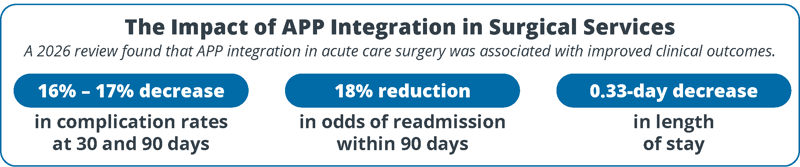
By integrating APPs into surgical teams, organizations can expand capacity, support continuity of care, and allow surgeons to focus more of their time on complex surgical care.
Leverage Locum Tenens Surgeons: Bridge Gaps in Clinical Coverage
With general surgeon shortages persisting, healthcare organizations are increasingly adopting more flexible staffing models to maintain access to care. As a result, locum tenens general surgeons have evolved from a temporary solution to a core workforce component.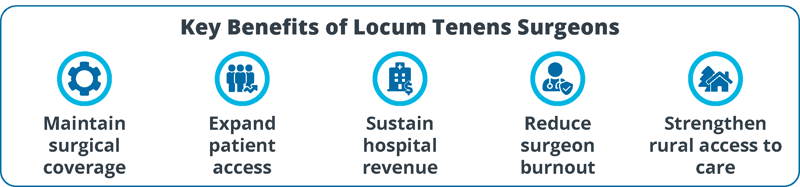
The growing reliance on locum tenens is reflected in national recruitment trends.
Centralize Locum Tenens Management: Implement MedicusOne
Managing locum tenens staffing across multiple vendors, departments, and systems can create unnecessary complexity and limit visibility. MedicusOne brings staffing operations under one accountable model, helping organizations streamline coverage management, improve cost control, and support consistent access to quality clinicians.
For an in-depth look at the general surgeon shortage and strategies for maintaining access to surgical care, download the complete report here.
Frequently Asked Questions About the General Surgeon Shortage
Is There a Shortage of General Surgeons in the United States?
How Many General Surgeons Are There Per Capita in the United States?
There are approximately 9 general surgeons per 100,000 people in the U.S., with concentration varying considerably by state and jurisdiction according to Medicus' proprietary data.
How Long Does It Take to Fill an Open General Surgery Position?
Is the General Surgeon Shortage Impacting Rural Communities?
Yes, the general surgeon shortage is severe in rural communities, with nearly one-third of rural U.S. counties lacking a general surgeon, according to the Journal of Surgical Education.
How Can Locum Tenens Help Address the General Surgeon Shortage?
By incorporating locum tenens surgeons into staffing strategies, healthcare organizations can use locums to maintain coverage during vacancies, recruitment periods, leaves, and other workforce transitions.