Blog Highlights
Rural Hospital Closures & Physician Shortages
How Can Locum Tenens Help Sustain Rural Healthcare Access?
Recognizing National Rural Health Day
Frequently Asked Questions About Rural Healthcare
Every November, National Rural Health Day recognizes the clinicians, healthcare organizations, and community partners who keep care close to home for nearly 61 million rural Americans. Their work often happens with smaller teams, fewer specialists, and longer distances between facilities than in metropolitan areas.
This year, that work continues as rural healthcare leaders respond to hospital closures, service line changes, and growing physician shortages. Understanding the scope of these pressures, and the role locum tenens physicians and advanced practitioners can play in sustaining essential services, is an important part of planning for the future of rural care.
Rural Hospital Closures & Physician Shortages
How Many Rural Hospitals Have Closed or Are at Risk of Closure?
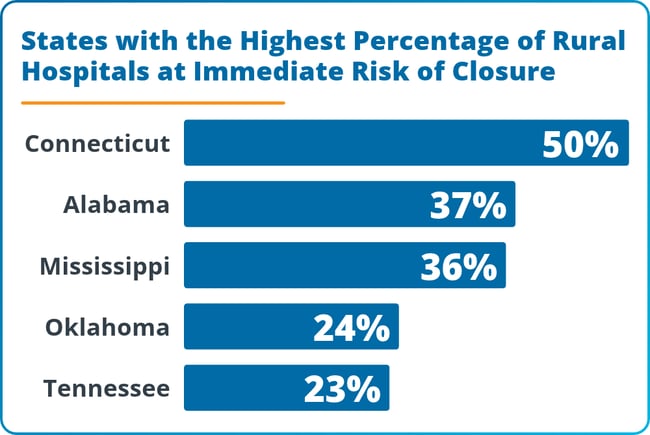
In just over a decade, more than 100 rural U.S. hospitals have closed, according to the Center for Healthcare Quality & Payment Reform (CHQPR), leaving many communities without access to an emergency room, inpatient care, and other essential hospital services. Hundreds more remain vulnerable, as financial instability now puts nearly 700 rural hospitals, or one-third of the national total, at risk of closure, including 260 at immediate risk, according to CHQPR, as of October 2026.
Hospital closures are not the only changes affecting rural healthcare access. Since 2023, 56 rural hospitals have converted to Rural Emergency Hospitals (REHs), a federal designation that allows eligible hospitals to maintain emergency and certain outpatient services while discontinuing inpatient care. According to CHQPR, these hospitals previously cared for more than 12,000 inpatients annually.
Which Services Are Rural Hospitals Losing?
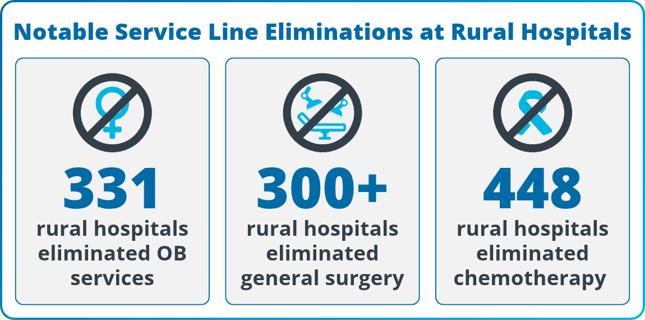
Beyond inpatient care, rural communities are also experiencing a reduction or elimination in specialty services. The Chartis 2026 Rural Health State of the State report notes the loss of several specialties across hundreds of rural hospitals, including obstetrics, general surgery since 2011, and chemotherapy services since 2014.
For the communities these hospitals serve, losing a service line can mean longer travel distances to receive care while neighboring hospitals, health systems, and clinics absorb additional demand. These challenges are further compounded by physician shortages, making it increasingly difficult for rural healthcare organizations to maintain access to essential services.
How Severe Is the Rural Physician Shortage?
Rural communities are projected to experience a disproportionate share of the nation's physician shortage in the coming years. According to the National Center for Health Workforce Analysis (NCHWA), the United States is projected to face a shortfall of 106,520 full-time equivalent (FTE) physicians in 2027, with non-metro areas accounting for 89,670 FTE physicians. These physician shortages are expected to persist through 2032, creating ongoing challenges for rural healthcare organizations.
The shortage extends across multiple specialties, affecting the availability of both primary and specialty care in rural areas. Primary care is projected to experience the largest physician deficit in 2027, with substantial shortages also anticipated in anesthesiology, emergency medicine, general surgery, radiology, and hospital medicine.
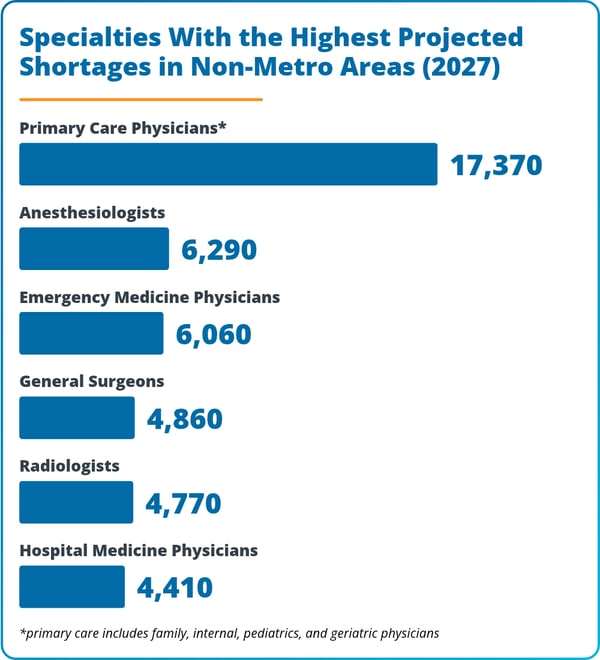
Specialties With the Highest Projected Shortages in Non-Metro Areas (2027):
- Primary Care Physicians (includes family, internal, pediatrics, and geriatric physicians): 17,370 FTEs
- Anesthesiologists: 6,290 FTEs
- Emergency Medicine Physicians: 6,060 FTEs
- General Surgeons: 4,860 FTEs
- Radiologists: 4,770 FTEs
- Hospital Medicine Physicians: 4,410 FTEs
How Can Locum Tenens Help Sustain Rural Healthcare Access?
Rural healthcare organizations are finding ways to maintain essential services and meet community needs amid ongoing physician shortages and operational pressures. While no single solution can address every challenge, locum tenens physicians and advanced practitioners offer an additional resource for supporting care delivery. From filling critical coverage gaps to expanding access to specialty services, locum tenens can support rural healthcare in several ways.
Six Ways Locum Tenens Supports Rural Healthcare
- Maintaining Coverage: During planned absences, unexpected vacancies, increases in patient volumes, and other staffing needs, locum tenens can be leveraged to bridge gaps in coverage and maintain access to care.
- Protecting Service Line Continuity: Physician shortages can put essential healthcare services at risk. Implementing locum tenens clinicians can help organizations sustain critical service lines and avoid reducing hours or temporarily suspending services because of staffing constraints.
- Expanding Access to Specialty Care: Many rural communities have limited or no local specialty resources. Bringing in locum tenens specialists lets patients receive evaluations and procedures closer to home, reducing travel burdens and helping organizations offer services that might not be sustainable on a full-time basis.
- Providing Stability During Recruitment: Recruiting full-time clinicians takes time, particularly in rural areas. Locum tenens coverage lets organizations keep meeting patient needs while recruiting and onboarding full-time staff.
- Supporting Rural Care Teams: Smaller care teams often carry significant workloads. Seasonal demand, turnover, and persistent staffing gaps increase the risk of burnout and turnover. Locum tenens clinicians help share clinical responsibilities, reduce burnout, and give internal teams greater scheduling flexibility.
- Building Sustainable Staffing Models: More healthcare leaders are incorporating locum tenens into long-term workforce planning to support clinical stability. For organizations managing multiple FTE gaps, the Medicus Transition Program, a project-based model Medicus pioneered, provides tailored support to stabilize services and maintain access to care while long-term staffing plans take shape.
Strengthening rural healthcare access requires workforce strategies that reflect each organization's needs and the communities it serves. For healthcare leaders, locum tenens offers the flexibility to address specific coverage priorities while supporting broader staffing objectives. Whether incorporated into daily operations or leveraged during periods of strain, locum tenens can be a valuable resource for maintaining essential services, supporting clinical stability, and keeping quality care accessible close to home.
Recognizing National Rural Health Day
National Rural Health Day, observed annually on the third Thursday in November, celebrates the dedication of the healthcare organizations, clinicians, and community partners who work tirelessly to support rural communities. The day also brings needed attention to the workforce challenges rural communities continue to face.
At Medicus, we partner with rural hospitals, clinics, and health systems to provide the locum tenens coverage they need to maintain essential services. By working closely with each organization to understand its coverage priorities, we help rural care teams keep services running and patients connected to care close to home.
If you are interested in learning how Medicus can support rural healthcare organizations with locum tenens staffing, complete the short form below.
Frequently Asked Questions About Rural Healthcare
What Is National Rural Health Day?
National Rural Health Day is observed annually on the third Thursday of November to recognize the dedication of healthcare professionals, organizations, and communities working to strengthen rural healthcare. Established in 2011 by the National Organization of State Offices of Rural Health (NOSORH), the day celebrates the contributions of rural healthcare providers while raising awareness of the unique challenges rural communities face, including physician shortages and limited access to essential healthcare services.
What Is Causing Physician Shortages in Rural Areas?
Several factors drive rural physician shortages, including the geographic distribution of healthcare professionals, recruitment and retention challenges, an aging physician workforce, and rising demand for healthcare services. These factors can make it harder to maintain consistent access to primary and specialty care.
What Is a Rural Emergency Hospital?
A Rural Emergency Hospital (REH) is a Medicare provider designation that allows eligible rural hospitals to continue offering emergency and certain outpatient services without operating traditional inpatient services. The model provides an alternative to closure while preserving access to essential emergency care.
How Can Locum Tenens Help Address Rural Physician Shortages?
Locum tenens physicians and advanced practitioners provide temporary clinical coverage that healthcare organizations can use to maintain essential services, support existing teams, and address gaps during full-time recruitment. Coverage can also support specialty care access and workforce transitions, depending on an organization's clinical and operational needs.
How Does Medicus Support Rural Healthcare Organizations with Staffing?
Medicus works alongside rural healthcare organizations to keep essential services in place through locum tenens staffing. Its physicians and advanced practitioners help rural hospitals and clinics maintain coverage, sustain critical service lines, and expand access to specialty care close to home. Medicus also offers the Medicus Transition Program, which provides tailored, project-based support for organizations working to stabilize services across multiple open positions.